
Cryptocurrency
Bitcoin Technical Analysis 9/14/18 & Outlooks for 2019 & 2020
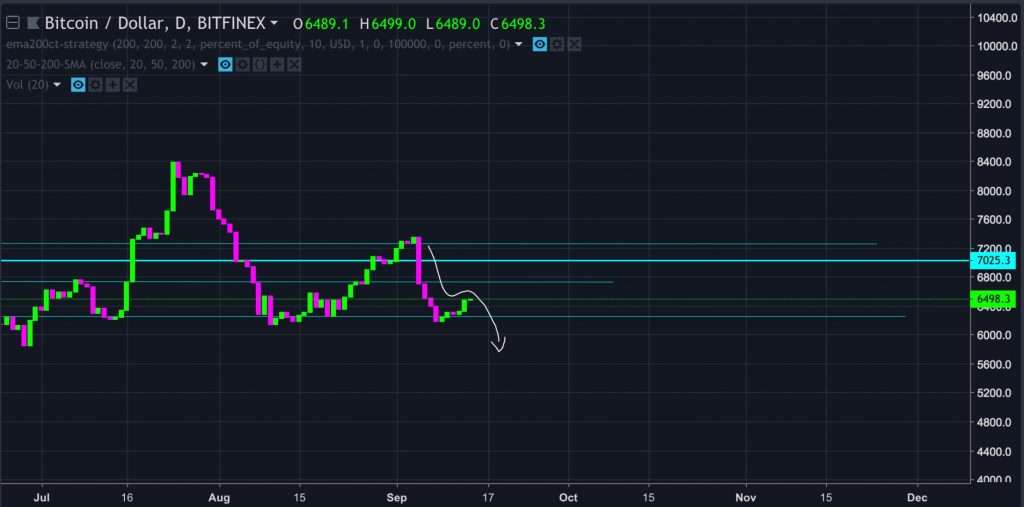
Beginning with the fundamentals, bitcoin rallied yesterday from $6,200 to hit strong resistance at $6,500. This was expected considering $6,500 has historically been a critical resistance level. The RSI also reached a critical resistance point of around 42. In order for a short term bull run to occur, bitcoin would need to break through the […]

Beginning with the fundamentals, bitcoin rallied yesterday from $6,200 to hit strong resistance at $6,500. This was expected considering $6,500 has historically been a critical resistance level. The RSI also reached a critical resistance point of around 42. In order for a short term bull run to occur, bitcoin would need to break through the resistance point at $6,500 and sustain a new support level at $6,600. From here, bitcoin would need to retain momentum to break the $6,700 resistance level to find support at $6,800. With the current market sentiment being bearish, a bullish breakthrough such as this is not likely.
If rejections at 6,500 continue to occur, the bear flag pattern seen below is likely to form. The last bull movement, which began on August 15th, was created by a low volume rally. This rally was then followed by a high volume sell off. This pattern is likely to occur as our current capitulation period is fueled with low volume. Ultimately, this appears to be merely another dead cat bounce in the continual bear market.
There is an interesting correlation between the price of bitcoin and the US Dollar. In 2017, the US Dollar was experiencing a significant bear market while the crypto market was growing exponentially. Now the opposite is true. Bitcoin is in a severe bear market and the US Dollar is becoming stronger. However, there is a possibility that the US Dollar is beginning to weaken. Earlier in the week, the US Dollar dropped after the Consumer Price Index missed expectations. The following statistics were released in a recent publication,
“The U.S. Dollar Index has tumbled lower after U.S. consumer price index data came in weaker than expected. Monthly CPI rose 0.2% which was weaker than expected, while year-on-year CPI increased less than expected, at 2.7%.”
The run up to $6,500 simultaneously occurred with the depreciation of the US Dollar earlier in the week.
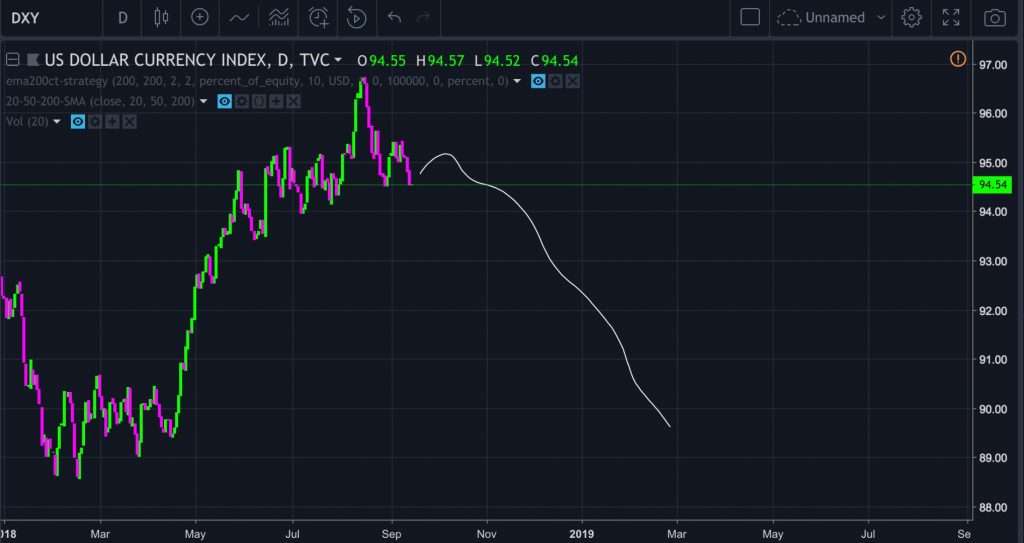
Although most consider bitcoin and cryptocurrencies as technologies, they currently trade similar to commodities. This is because they are often used as a hedge to traditional markets or the US Dollar. Some institutions, such as Goldman Sachs, are preparing for the US Dollar to experience a mild correction market throughout the rest of 2018 into 2019. If the Dollar entered a bear market throughout 2019 into 2020, it may have the potential to create a significant effect on the cryptocurrency market.
To compound this effect, the next bitcoin block halving will occur in 2020. Currently, miners in the network create 12.5 new bitcoins every block. In 2020, this number will be cut to 6.25. While there have only been two previous halvings, they both led to a subsequent increase in the price of bitcoin. Various financial experts think block halvings have a similar effect to the way traditional markets change with interest rates or changes in commodity supply. Glen Goodman, Bitcoin analyst and author of forthcoming book The Crypto Trader commented,
“Previous halvenings have shown negligible impact on Bitcoin’s price. This is because — rather like a much anticipated interest rate cut — everybody already knows it’s going to happen way in advance,”
Regardless of the halving, 2020 will be a critical year for cryptocurrencies, as many significant updates are expected to be released. Some include Casper and Sharding for Ethereum.
Disclaimer: I am not a financial advisor. This is not financial advice. Please do your research independently and make objective decisions. This article is intended to educate readers about the future of bitcoin and its correlation to the US Dollar. The author of the article owns cryptocurrency.