
Cryptocurrency
CFTC says cryptocurrency ether is a commodity, and ether futures are next
As Yahoo! Finance reported, “Last December, the Commodity Futures Trading Commission (CFTC) issued a public call for feedback to ‘better inform the Commission’s understanding’ of the Ethereum network and the cryptocurrency ether. “Now CFTC Chairman Heath Tarbert, who just took over the role in July, has come to a decision on its status. Tarbert believes ether […]
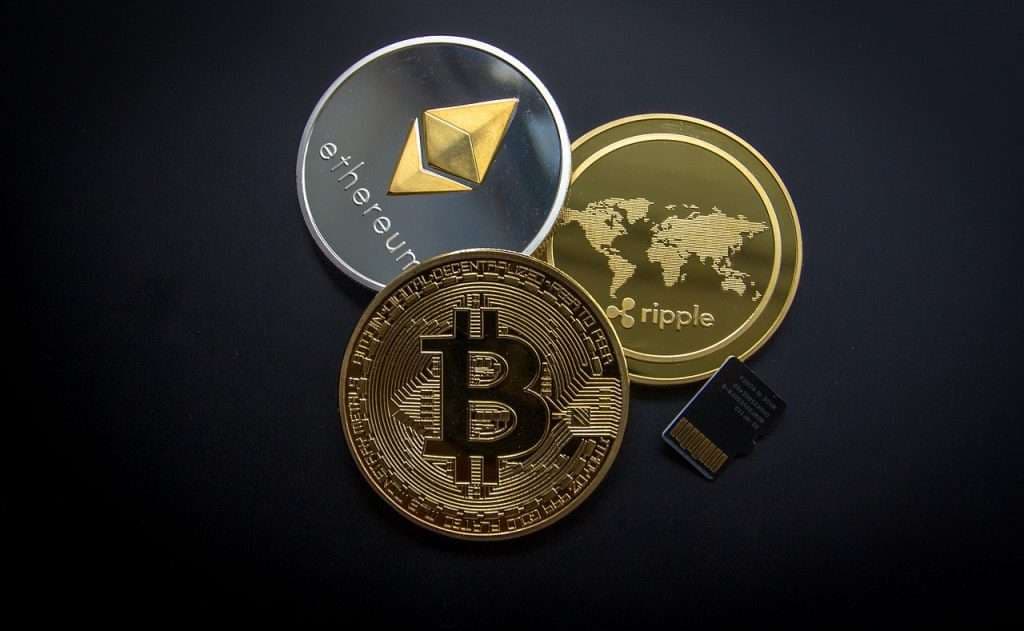
As Yahoo! Finance reported, “Last December, the Commodity Futures Trading Commission (CFTC) issued a public call for feedback to ‘better inform the Commission’s understanding’ of the Ethereum network and the cryptocurrency ether.
“Now CFTC Chairman Heath Tarbert, who just took over the role in July, has come to a decision on its status. Tarbert believes ether (ETH) is a commodity, and thus falls under the jurisdiction of the CFTC. He also anticipates ether futures trading on U.S. markets in the near future.
“‘We’ve been very clear on bitcoin: bitcoin is a commodity. We haven’t said anything about ether—until now,’ Tarbert said on stage at Yahoo Finance’s All Markets Summit in New York City on Thursday. ‘It is my view as chairman of the CFTC that ether is a commodity.’
“Tarbert agrees with the SEC’s previous guidance that bitcoin and ether are not securities. And he says the CFTC is working with the SEC on these issues.
“The CFTC first stated that it views ‘bitcoin and other virtual currencies’ as commodities back in 2015 (long before the SEC did), buried in a filing when it brought charges against a company called Coinflip. But this is the first time the CFTC has given guidance on ether…
“…Perhaps most interestingly, Tarbert says that ‘forked’ assets—cryptocurrencies like bitcoin cash (BCH), bitcoin gold (BTG), and ethereum classic (ETC), coins created via forks from the original underlying blockchain—should be treated by regulators the same as the original asset. In other words, the CFTC’s classification of each coin depends on how the coin was created.
“’It stands to reason that similarly assets should be treated similarly. If the underlying asset, the original digital asset, hasn’t been determined to be a security and is therefore a commodity, most likely the forked asset will be the same,’ Tarbert said, ‘unless the fork itself raises some securities law issues under that classic Howey Test.’
“The ‘Howey Test‘ refers to a 1946 case involving the selling of shares in a citrus grove that the SEC now uses as its north star in determining whether a digital currency behaves like a security. SEC director of corporate finance Bill Hinman, speaking at Yahoo Finance’s All Markets Summit: Crypto in San Francisco in June of last year, explained that newly created tokens are likely securities because they are marketed with “’he promise that the assets will be cultivated in a way that will cause them to grow in value, to be sold later at a profit,’ and ‘typically are sold to a wide audience rather than to persons who are likely to use them on the network.’
“Bitcoin and ether, on the other hand, Hinman and the SEC see as sufficiently decentralized and not controlled by a third party “whose efforts are a key determining factor in the enterprise.” Thus Hinman determined that sales of bitcoin and ether are not securities transactions…
“…Tarbert also gave insight on how he and the CFTC view coins created through initial coin offerings (ICOs). He believes it is possible for a new coin to start out as a security but eventually become a commodity. ‘You can have a situation where something in an initial coin offering is a security initially, but over time, it gets more decentralized, and there’s a tangible value there, so you can have things that change back and forth.’”
See and read the story at Yahoo! Finance.
Track the current price of Bitcoin, Ethereum, Ripple and altcoins here.