
Options News
Could A Rise in Interest Rates Be Bearish for 2019?
When credit becomes expensive, it pulls markets down. This is a natural economic pattern that occurs throughout history and is continuing today. There are already signs in the S&P 500 that the stock market is weakening. While the index has found temporary support, it is still questionable whether or not the market will continue to […]
When credit becomes expensive, it pulls markets down. This is a natural economic pattern that occurs throughout history and is continuing today. There are already signs in the S&P 500 that the stock market is weakening. While the index has found temporary support, it is still questionable whether or not the market will continue to record all time highs before entering a bear market. No bubble or bear market is the same, but cycles repeat themselves with similar patterns and characteristics.
If interest rates continue to rise, then lending and borrowing will become more difficult. In the economy, one person’s spending is another person’s income. When people use credit they spend money they do not have, which creates higher incomes leading to expansions and bubbles. Eventually, the debt has to be paid back and people are forced to spend less then they earn. But since one person’s spending is another person’s income, a decrease in spending forces incomes to fall and the debt actually becomes worst. This is known as austerity and it is a common characteristic of debt cycles.
Currently, our society has a significant amount of debt. As interest rates continue to increase, the debt becomes more expensive and harder to pay back. Tariffs also hurt domestic consumers because a lack of competition typically leads to higher prices. More debt combined with rising interest rates and higher prices will likely hurt the US consumer and the economy. Some of the largest companies in the United States have been suffering because of the current tariffs on Chinese goods. One of the most notable is Ford, which lost $1 billion in profits as a result of tariffs on Chinese steel. This problem only appears to be getting worse as Chinese tariffs are expected to increase to 25% in 2019, (for inverters and non-lithium batteries).
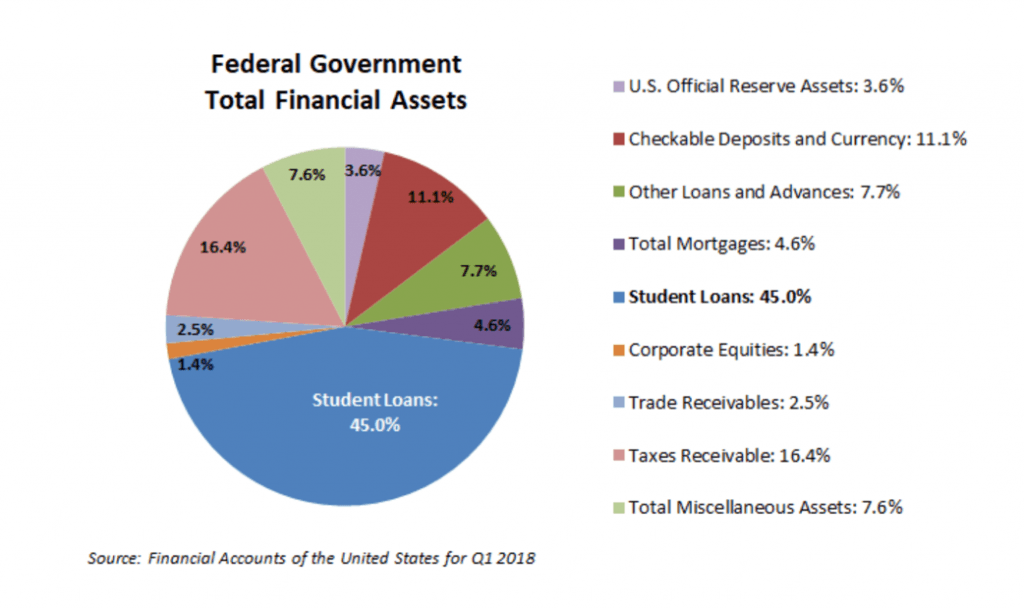
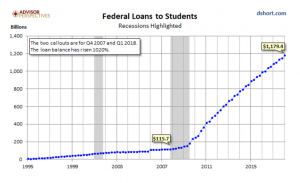
Additionally, if interest rates increase it will be harder for millennials to pay off student loan debt. This is significant because 45% of the US Government’s assets are student loans. Furthermore, the federal loan balance increased 1020% over the last decade.
As default percentages increase, investors become more skeptical of whether or not these assets will retain their value. Collectively, 70% of college students in the US graduate with debt. The average amount of debt is $37,172. The average millennial salary is $35,592. This imbalance between debt and income is unsettling and the housing market is already showing signs of weakness.
If interest rates continue to increase, fewer millennials will be able to afford homes along with their student loans. Homebuilder stocks are already beginning to show weakness along with a significant portion of the market. The top three homebuilder ETFs have all decreased in the past year. According to investopedia.com, the three largest homebuilders ETFs are IShares U.S. Home Construction ETF, SPDR S&P Homebuilders ETF, and PowerShares Dynamic Building & Construction Portfolio. While these ETFs found support throughout the last week of October, the downtrend is most likely not over.
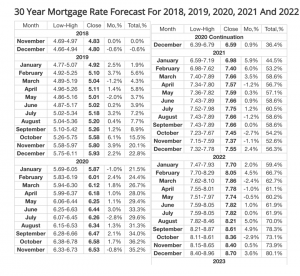
The chart above lists the projected interest rates for 30 year mortgage loans. If rates continue along this path throughout 2023, the economy could experience a difficult recession. If the Federal Reserve alters their path by lowering interest rates to stimulate borrowing, the debt burden could become worse. Eventually the stimulation from low interest rates will end and borrowers will be forced to pay their debts, or at least agree to debt restructuring.
Holistically, these factors create a bearish outlook for 2019. Overall, it is a very interesting time in the markets and a bearish sentiment does not indicate a lack of opportunity. When there is blood in the streets, talented traders take advantage of volatility.
Disclaimer: I am not a financial advisor. This is not financial advice. Please do your research independently and make objective decisions. This article is intended to educate readers on the recent state of the Housing and Stock markets. The author of the article owns cryptocurrency.
Chart Image Sources available at
https://longforecast.com/mortgage-interest-rates-forecast-2017-2018-2019-2020-2021-30-year-15-year
https://www.advisorperspectives.com/dshort/commentaries/2018/09/26/the-fed-s-financial-accounts-what-is-uncle-sam-s-largest-asset