
Trading Insights
Decoding a Volatile Week of Impactful Earnings
Recapping another colossal week of earnings as we search for clues to help us trade the next one This past week was another action-packed episode of big tech earnings and all we have to say is: Phew! Things were looking a little dicey back there for the bulls, with the Federal Reserve’s shift towards tighter […]
Recapping another colossal week of earnings as we search for clues to help us trade the next one
This past week was another action-packed episode of big tech earnings and all we have to say is: Phew!
Things were looking a little dicey back there for the bulls, with the Federal Reserve’s shift towards tighter monetary policy in full view. The market was looking for our remaining tech titans to pull through and save us from bear country.
Though Meta wasn’t able to perform (Yikes!), Google and Amazon pulled through and showed investors that there’s still some growth left in the growth sector. Two out of three ain’t bad, right?
Overall, last week was extremely feast or famine, with big rewards and bigger punishments being handed out to any stock who dared step out of line with analyst expectations. Let’s break it all down.
Exxon ($XOM)
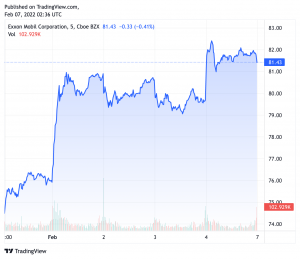
The biggest and baddest of the American oil companies kicked off the week of earnings season with their strongest report in seven years! Assisted by a rise in the price of oil and natural gas, Exxon leapt from $76 to $81 after reporting a beat on both revenue and EPS, and continued to climb throughout the week.
Even though they completely trounced analyst expectations, Exxon wasn’t finished. The company added fuel to the fire after announcing plans to resume their stock buyback program. Exxon plans to repurchase $10 billion of its shares over the next two years.
Advanced Micro Devices ($AMD)
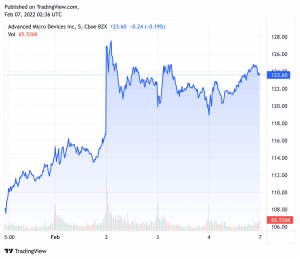
AMD took the baton from Exxon, reporting after hours on Tuesday, and they did not disappoint. AMD reported that EPS had grown 26% year-over-year and that revenue had grown 49% year-over-year, resulting in a beat on the top and bottom line.
Perhaps more importantly, AMD issued a hefty increase in guidance, forecasting $21.5 billion in 2022 sales compared to analyst expectations of $19.2 billion. As a result the stock rose as high as 11% in after hours trading, though the move faded somewhat at market open.
Alphabet ($GOOG, $GOOGL)
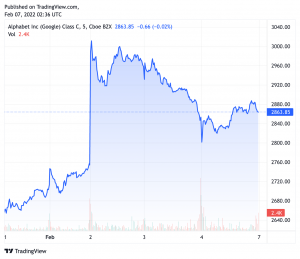
Okay, we’re starting to get into the “trillion dollar club”. It’s getting serious, and Google came to play, beating analyst expectations in EPS ($30.69 vs $27.34 expected) and revenue ($75.33B vs. $72.17B expected). This amounted to revenue growth of 32% – no small feat for a company with a market cap of nearly $2 trillion dollars!
Then, Alphabet gave the market an even bigger surprise when they issued a monster 20-for-1 stock split. Many will claim that stock splits have no effect on the underlying, that investors can simply buy fractional shares, and in some ways they’re right.
However, for a name like Alphabet, a massive split like this introduces a potential inclusion into the Dow Jones Industrial Average, a price-weighted index. It also offers a solution for GOOGL’s lack of options liquidity, considering that while there are fractional shares, there are no fractional options. Whether you think it should matter or not, the market has spoken: GOOGL is up 6.81% for the week. In the words of Market Rebellion co-founder Jon Najarian, “BANG!”
Meta ($FB)
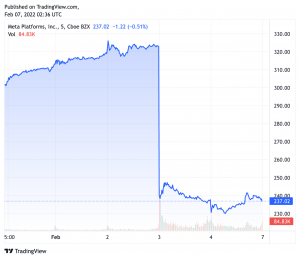
Wow! Big beats from Exxon, then AMD, then Google! Surely Meta will follow suit, right?
Wrong. We hate to be the bearer of bearish news, but Meta got hit so hard following their Q4 earnings that they aren’t even in the trillion dollar club anymore. Meta beat analyst expectations of revenue by a slim margin ($33.67B vs $33.4B expected) but missed on EPS ($3.67 vs $3.84 expected)
After CEO Mark Zuckerberg signaled that TikTok was eating into Facebook’s user base, and that Apple’s privacy changes were weighing on $FB’s advertising sector, the stock suffered a one-day loss of $232 billion dollars. That’s the largest single-day loss of value in stock market history. Zuckerberg went on to forecast weaker-than-expected revenue growth for the upcoming quarter, sinking the nail in the proverbial coffin.
Amazon ($AMZN)
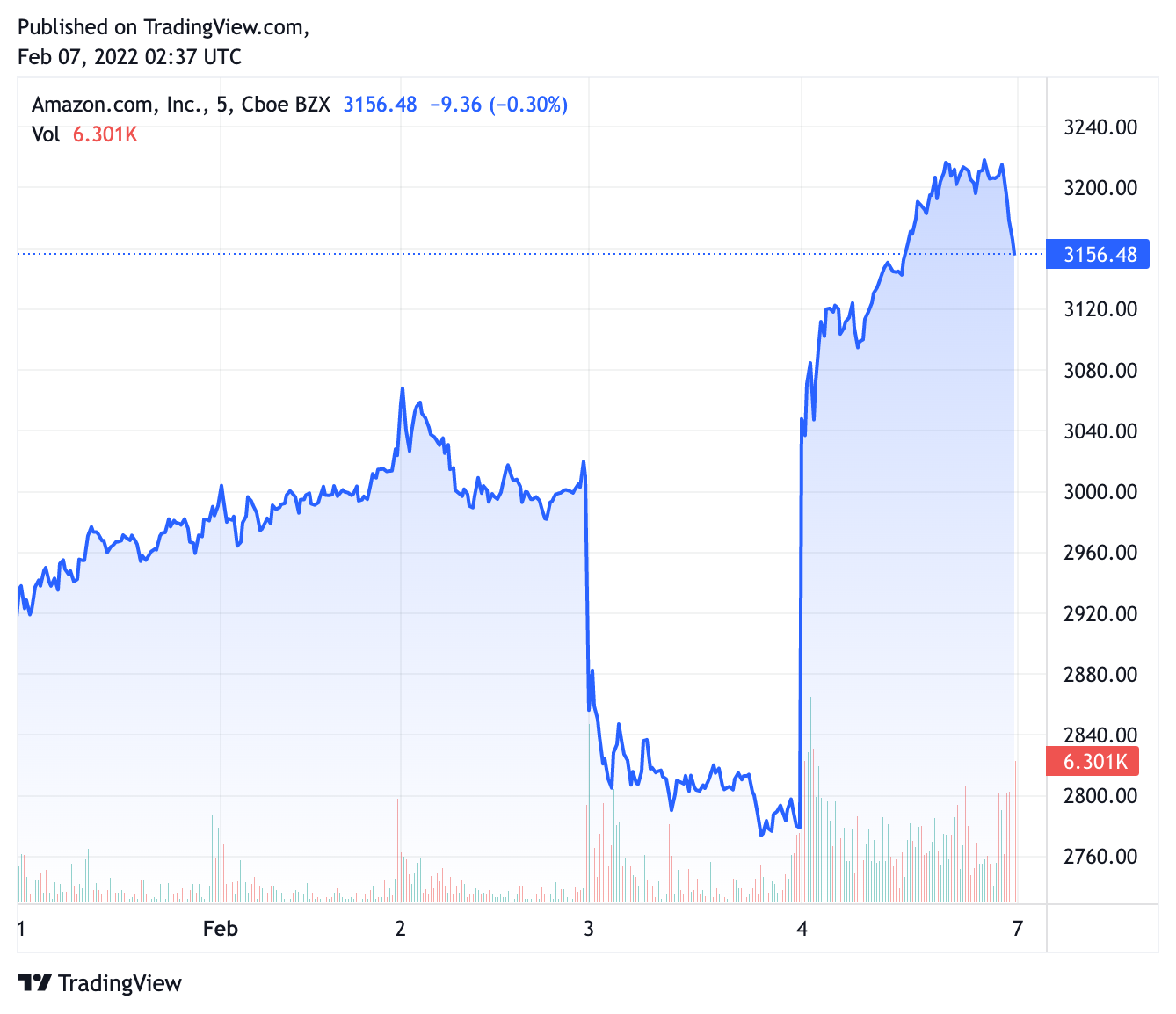 Looking at Amazon’s chart, you might think they reported (and missed) earnings on February 3rd based on the steep drop in price. This was actually a reaction to Meta’s massive miss, with the market likely predicting that Amazon’s ad business would be equally affected. That was not the case.
The e-commerce and cloud giant reported a massive beat on EPS, reporting $27.75 vs. $3.66 expected. Though this beat was largely due to a one-time boost from their prior investment in Rivian. Amazon missed revenue by .13%, reporting $137.59B compared to an expectation of $137.41B. Amazon busted out an additional surprise: A price hike in Amazon Prime. The stock went on to jump 14%, setting yet another stock market record: The biggest one-day gain in market cap ($191 billion) in stock market history.
Drawing conclusions from a wild week
There’s a lot that we could say about this past earnings week. Perhaps the most important conclusions can be drawn from the two opposing records set within 24 hours of each other: The biggest single-day loss, and gain, in market cap. In Facebook’s case, a nervous CEO was enough to draw ire from investors big and small, resulting in Zuckerberg losing his spot as one of the top ten wealthiest people on Earth.
Some analysts, such as the pundits on CNBC’s Fast Money, have suggested that perhaps the CEO was sandbagging about the threats of heavy competition from Tiktok in order to get congressional regulators to back off. However, after warning staff that he may cry during a virtual meeting that followed the earnings report, it’s clear that Zuckerberg was at least somewhat nervous about his company.
Simultaneously, tech investors aren’t gone. They’re just being particularly divisive. The money that was once invested in Facebook quickly found a new home in the arms of Amazon after the company indicated that it could continue to grow on par with Wall Street’s expectations.
It wasn’t all cheers, though. Wall Street legend Charlie Munger was more critical of Amazon’s earnings. Though the EPS beat was substantial it was largely due to a one-time Rivian boost. Additionally, operating income fell by 49.66% year-over-year. Still, the market rewarded the tech giant, indicating that investors don’t want to give up their exposure to the tech sector just yet.
What’s to come
As traders, we need to be wary of more volatility going forward. We may end the week up, we may end it down, but if the past month is any indication, it’s unlikely to be a straight line in either direction. But for those momentum traders bold enough to make an earnings play in the upcoming week, volatility presents opportunity. Traders will get that opportunity in the following large-cap names:
Pfizer Inc. ($PFE), Disney ($DIS), Twilio ($TWLO), Chipotle ($CMG), Uber ($UBER), Lyft ($LYFT), Coca-Cola ($KO), PepsiCo ($PEP), AstraZeneca ($AZN), and Twitter ($TWTR).
Using options, traders need not fear impending bearish doom. They just need to be smart, opportunistic, and probably a little lucky. Like a shark smelling blood in the water, good traders stay vigilant, searching for the perfect moment to strike. The only question that remains:
How will you hunt for gains this week?