
Trading Insights
How Ukraine Peace Talks Could Lead to a Rebound in Travel Stocks
Between Covid-19 resurgences and rising fuel costs, the travel industry was already having a difficult year. The conflict in Ukraine only further complicated the issue. Two weeks ago, the sentiment around the conflict and the travel sector as a whole was extremely negative. We published an article at that time about the many ways in […]

Between Covid-19 resurgences and rising fuel costs, the travel industry was already having a difficult year. The conflict in Ukraine only further complicated the issue.

Two weeks ago, the sentiment around the conflict and the travel sector as a whole was extremely negative. We published an article at that time about the many ways in which the conflict in Ukraine had shaken the stock market — from sky high commodity and oil prices, to falling macro-markets. However, recent developments have led some investors to become cautiously optimistic.
Notably, reports surfaced on Tuesday that Russia had begun pulling back its forces, heavily reducing hostilities near the capital of Kyiv. At the same time, President Zelensky had spoken out in favor of a compromise that would allow Russia control over much of the Donbass region (its main provocation for initiating the conflict) as well as assurances of Ukraine’s neutrality.
These developments have led to a complete shift in sentiment, both around the future of the conflict, and around its effects on the stock market.

A notable shift towards positive sentiment as peace talks continue to progress
It isn’t just the major news organizations that are taking note.
The effects of Ukrainian peace talks on the market
Every sector, from macro ETFs to individual sectors, have felt the impact of the Ukrainian conflict in some way or another. Commodities, particularly energy, were driven higher due to reliance on Russian oil and gas adding fuel to the fire on an already stretched supply chain.
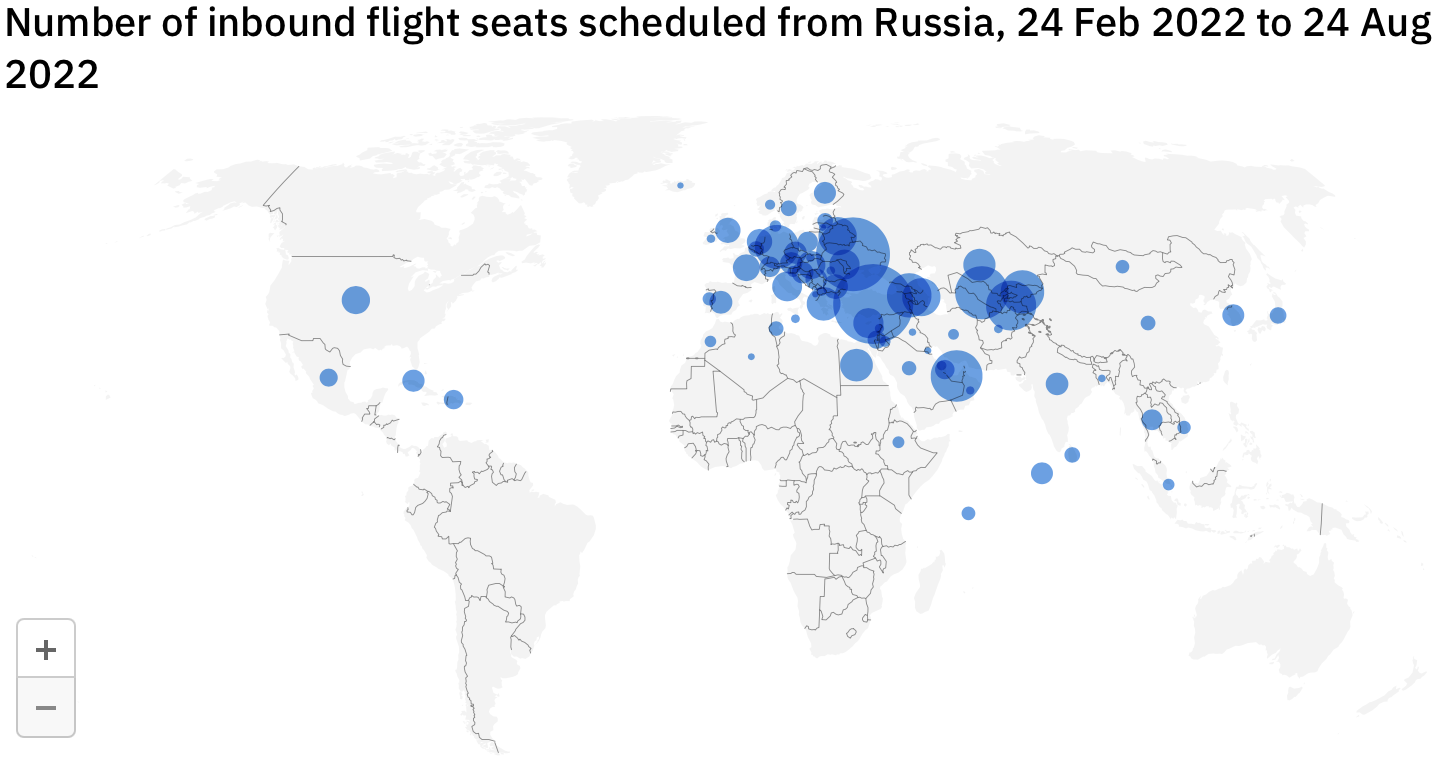
At the same time, the travel industry was on the opposite end of the spectrum, selling off as economic sanctions and travel restrictions took their toll.
Source: InvestorMonitor
Outbound flights from Russia weren’t a major source of revenue for airlines, but still imposed a sudden shock on an already beaten-down sector.
Yet with each positive headline about the possibility of Ukraine and Russia reaching a peace agreement, the travel sector (led by airlines) have begun to claw back their recent losses — at the expense of the energy sector.
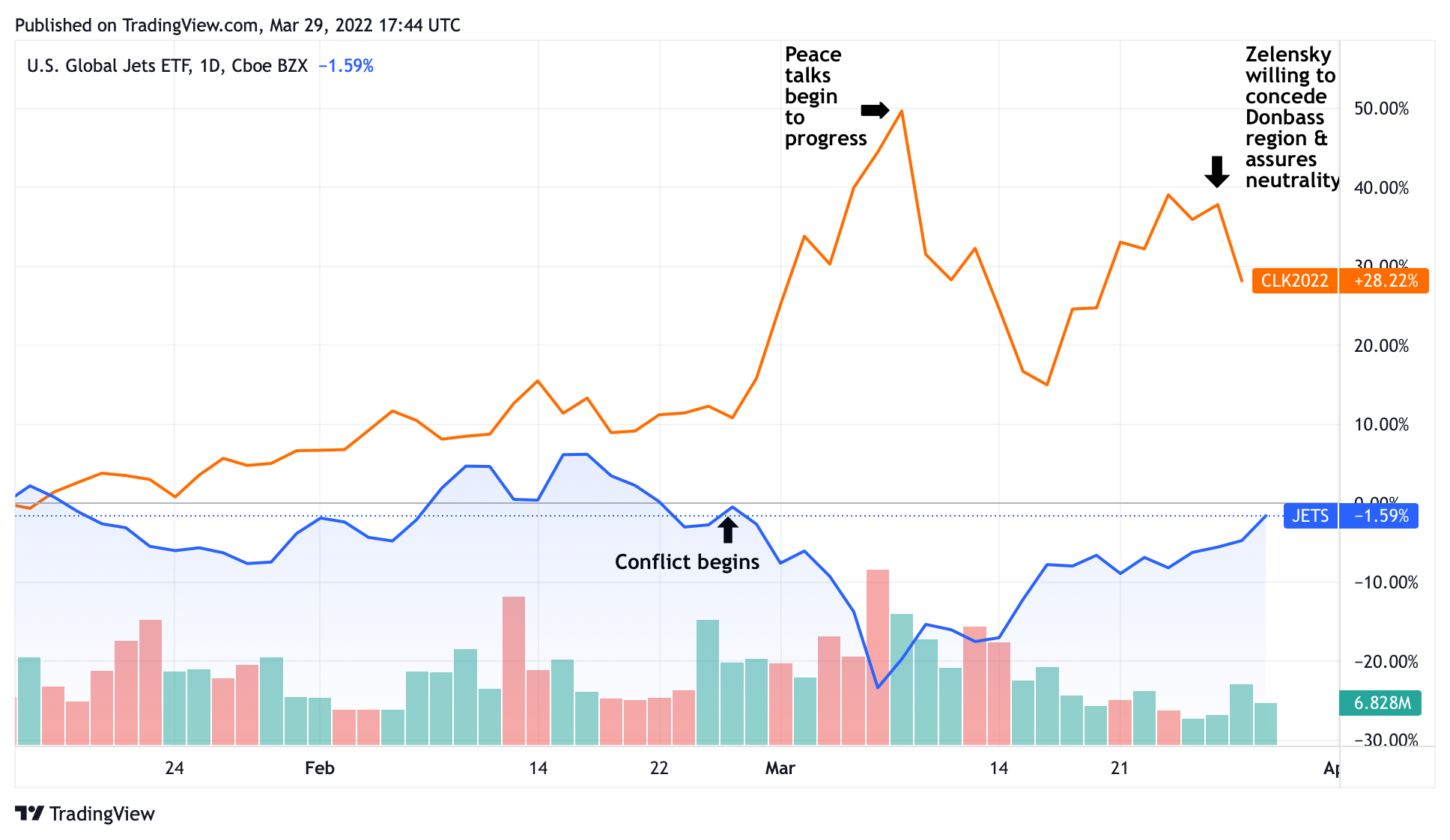 Two charts: $JETS ETF in blue, and Crude Oil in orange. Divergence and convergence.
The beginning of a travel turnaround?
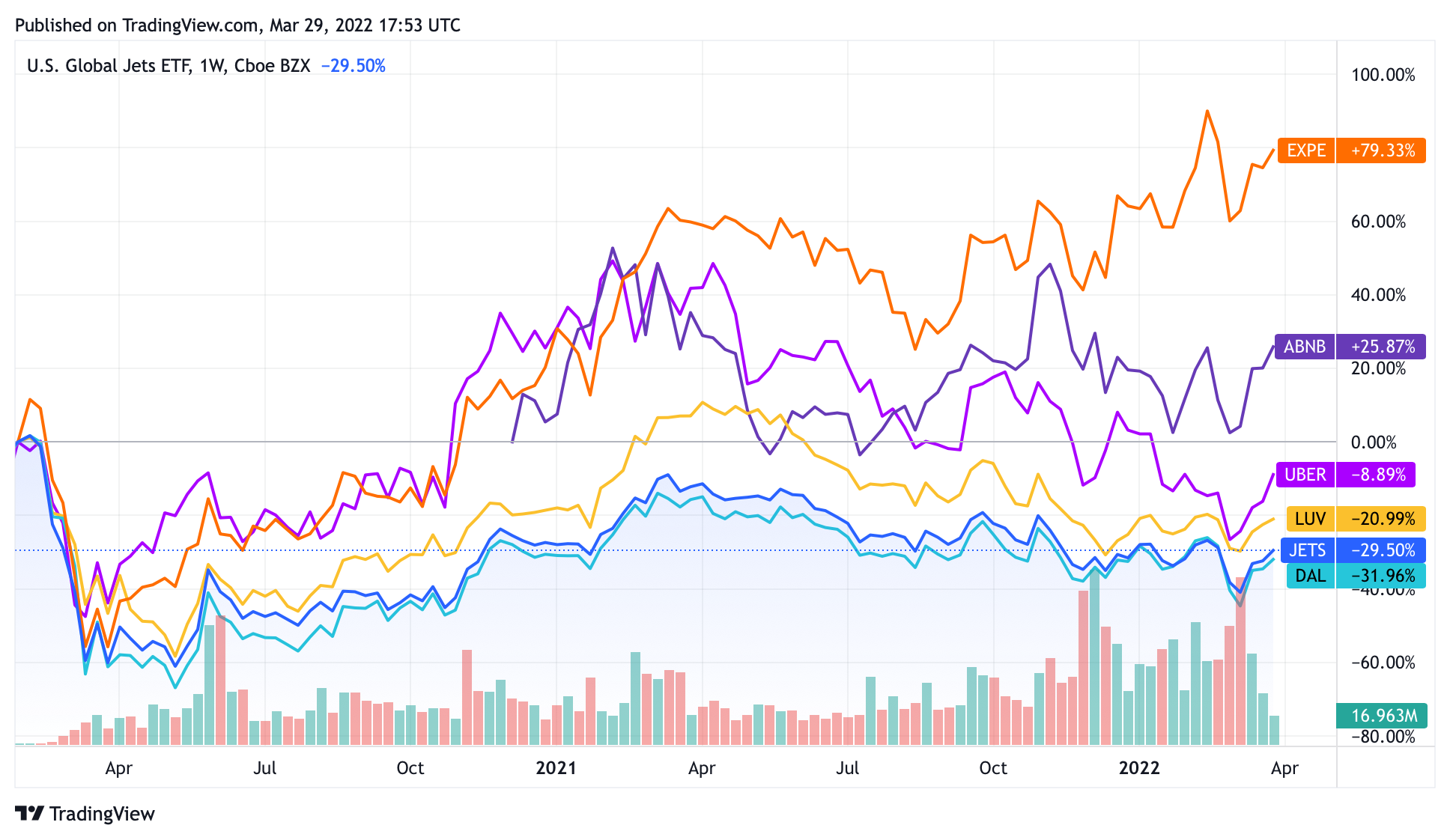 While booking agents like Airbnb and Expedia have survived — and thrived through the pandemic, its counterparts in the “modes of travel” business have not been so lucky.
Many components of the travel sector still have a lot of ground to cover in order to return to their pre-Covid highs. With booking agents like Expedia nearly doubling since March of 2020, it can be easy to forget that most airlines are still down 20-30% over the same timeframe.
However, with Covid cases declining and related travel restrictions being removed in most countries, a potential end to the Ukrainian conflict (which would likely cause a sudden decline in the price of jet fuel) could create a perfect storm of bullish news for the beaten down travel sector.
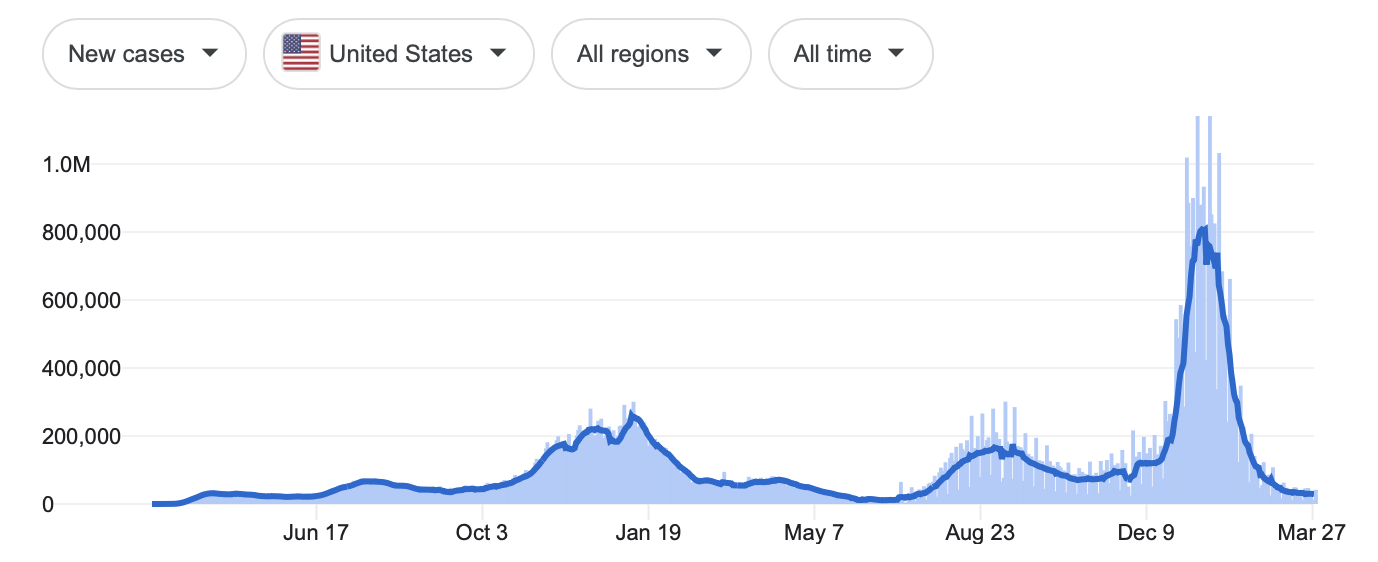 New US Covid cases have fallen dramatically since the discovery of the Omicron variant. Source: Google
Covid-19 is declining fast, and travelers are taking note. According to the TSA’s checkpoint travel numbers, passengers are taking to the skies at near pre-Covid rates, representing a significant rise over the past year.
According to the NDP Group, luggage sales have soared accordingly — up 129% over the past 12 months. Luggage prices have rocked higher as well, up 19% over the same period. Promising data like this is exactly what institutions look at when deciding whether or not an investment has merit.
The bottom line
The travel industry isn’t out of the woods yet. Many are still cautious about the pandemic despite falling case counts. Fuel prices are still considerably higher than they were at this time in 2021. The conflict in Ukraine is showing some signs of progress, but in war, nothing is certain.
After two years of lost profits, the airlines (and their respective stocks) will have their work cut out for them as they try to catch up to their pre-Covid highs. That said, for investors who believe that the worst is over, these stocks could represent a powerful dip-buying opportunity.
As always, Market Rebellion believes that the most important thing when considering any trade or investment is discipline. Arm yourself with as much data as possible. Have a plan for your entry and exit. And always stay disciplined.