
Cryptocurrency
How Will the Lending Sector Use Blockchain Technology? SALT: Blockchain-Backed Loans
The borrowing and lending of capital in the financial sector has traditionally been owned by banks, but now cryptocurrencies like Salt have opened up potential for a whole new system. Although borrowing and lending has developed primarily through fiat currencies, recent companies and institutions have been looking for a method of replicating these ideas through […]
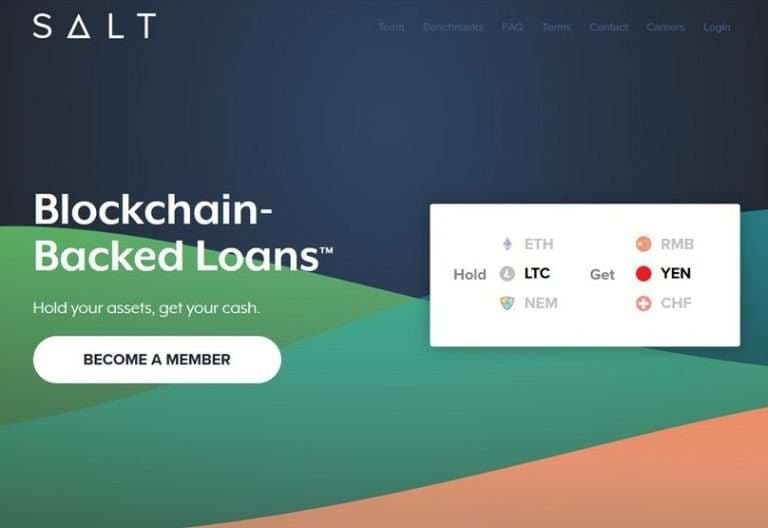
The borrowing and lending of capital in the financial sector has traditionally been owned by banks, but now cryptocurrencies like Salt have opened up potential for a whole new system. Although borrowing and lending has developed primarily through fiat currencies, recent companies and institutions have been looking for a method of replicating these ideas through cryptocurrencies. Salt is one answer to this search.
Salt is a membership-based lending and borrowing network that allows users to leverage their blockchain assets to secure cash loans. This cryptocurrency enables blockchain-backed loans which are collateralized by a blockchain asset, such as Bitcoin. If a person has an asset they desire to hold, Salt can execute borrowing the asset one wants to spend, regardless of credit history or geographic constraints. Therefore, when a person wants or needs cash to make a purchase, (but does not want to liquidate their assets) they can enable the members of the lending platform to leverage the value of certain digital assets. Ultimately, this can give consumers the access to cash while offsetting tax events, and avoiding exchange fees.
This method of exchange allows for the ability to maintain a long position in the particular asset held. This platform is specifically designed for blockchain assets. Unlike traditional forms of collateral such as real estate and automobiles, blockchain assets are divisible, and in many cases, instantly transferable.
Over the years, the lending industry has experienced various periods of change. According to Salt’s white paper, they ‘see a future where people worry less about their credit score and spend more time recording and monetizing the assets they already have.’ Through systems such as Salt, there is a possibly that within the next five years ownership of all assets could be recorded and transferred on various blockchains.
Salt will also release their crypto-secured credit card in 2018. This card is a form of credit that is collateralized by blockchain assets. It will operate on established credit card payment processor networks and allow for payments in national currencies.
As of now Salt offers three membership packages for consumers that want to use Salt as a lending system. The initial membership allows access for up to $10,000. In additional, premier packages allow access up to $100,000. While, enterprise accounts allow access for any amount greater than $100,000.
Salt appears to be an innovative technology with high potential to effect the financial sector. Salt launched on September 28th, 2017 at a price of about $6. Since then it hovered around $3-5 until climbing to its all-time high on December 29th ($17). However, it has seen a decrease in price since the end of December following the general bearish trend of the cryptocurrency market. As of now (April 23th), Salt is valued at $3.64.
Overall, Salt has interesting potential to change the traditional lending platform but its not without competition. ETHLend is another lending-based cryptocurrency designed on the Ethereum blockchain which is showing great potential. ETHLend will compete again Salt and many more lending cryptocurrencies are expected to follow.
Disclaimer: I am not a financial advisor. This is not financial advice. Please do your research independently and make object decisions. This article is intended to educate readers on the purpose and potential of the cryptocurrency SALT. Personality, I have not positions in SALT.