
Cryptocurrency
Is Ethereum a Viable Long-Term Investment? | What Vitalik Isn’t Telling You
First off, this article is not implying Ethereum won’t be a useful network in the future and it certainly doesn’t intend to undermine the efforts of Ethereum developers. In fact, Ethereum has very respectable use cases right now, such as stable coins and venture capital fund raising. This article intends to do one thing: examine […]
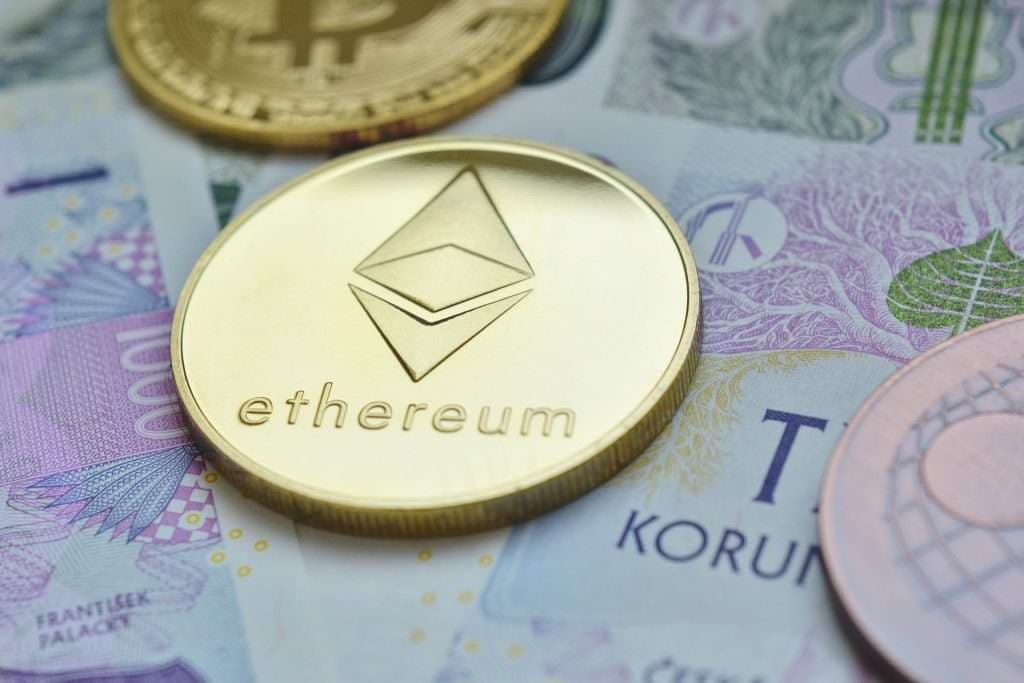
First off, this article is not implying Ethereum won’t be a useful network in the future and it certainly doesn’t intend to undermine the efforts of Ethereum developers. In fact, Ethereum has very respectable use cases right now, such as stable coins and venture capital fund raising. This article intends to do one thing: examine the long-term value proposition of Ethereum’s native digital asset.
In 2017, the emergence of hundreds or even thousands of ICOs was a phenomenon that brought billions of dollars and mass media attention to the cryptocurrency space. Ethereum’s role in the cryptocurrency industry in 2017 was extremely important for the growth and popularity of the space. Although there were numerous scams that emerged from it, the attention and glimpse into blockchain technology’s potential was enough to attract thousands of new developers and investors into the space.
Conversely, all of this ignores the fact that Ethereum’s tradable asset is actually a hindrance to the efficacy of the network as a whole. If the tradable utility token becomes extremely valuable in a monetary sense, it destroys the utility aspect of the network. As the price of Ethereum increases, applications built on the platform become more expensive to use. On Ethereum, users need to pay a gas fee in the form of Ether for the amount of computational energy they use. For example, Augur is a decentralized prediction market built on Ethereum. Each time a user places a bid they need to pay a gas fee denominated in Ethereum. ‘Gas’ is a computational unit on the network, while ‘gas cost’ is the amount it takes to perform a certain action on the network. Typically, a simple transaction on the platform costs 500 gas. ‘Gas cost’ remains constant because it is hard coded into the network, but ‘gas price’ is dependent on the price of Ethereum. Overall, the price of a gas fee is the ‘gas cost’ multiplied by the ‘gas price.’
Ethereum still needs an incentive structure to function. Ethereum’s security model relies on the digital asset having value to create an incentive to prevent against denial of service attacks and other vulnerabilities. However, this incentive only has to be a unit of computational account, it doesn’t have to increase as an investment overtime. Ultimately, it should be noted that the Ethereum network’s digital asset is better suited to act as a computational unit of account as opposed to a store of value which appreciates overtime.
Ethereum can still be profitable from speculation in the short term. For many investors it was extremely profitable over the course of 2017 and there’s a possibility it could increase in value and make many people rich in the next market cycle. Additionally, XRP increased 36,000% at one point in 2017 for no intrinsic purpose other than hype. After all, Ripple does not need the XRP token for technical reasons, nevertheless, it has been very successful as a speculative digital asset. Ethereum could increase in the next bull market cycle as well. There’s always a possibility that this article doesn’t age well, even so, investors have to use the existing information to evaluate the future of current systems.
The Ethereum network still has very promising future use cases. For instance, the tokenization of things such as real estate as well as trading equities on a blockchain can be very beneficial for the world. It enables financial inclusion for those who were previously restricted, and tokenizing equities allows assets to be traded 24/7 all around the world. As a result, Ethereum is an incredibly interesting experimental technology, but as a monetary medium, Ethereum in its current form does not appear to be a viable long-term investment. Could it be in the future? Absolutely. Certain hard forks could change the operations of the system, but as of now, just remember if your investment in Ethereum succeeds and increases another 10x, it may be wise to take profit because the efficiency of the network (in its current form) will most likely be compromised. It’s impossible to know how technologies will evolve and be used in the future, but above all, this article attempts to outline a humble prediction by questioning the current conceptualization of Ethereum as a store of value and a method of accruing wealth.
Disclaimer: Nothing in this article should be considered financial advice. Please do your research independently and make objective decisions. The author of the article owns cryptocurrency.