
Trading Insights
Jon Najarian Fades the Open
The market opened with an “everything rally”, but traders faded the open yet again. A story in two pictures. Source: Google In a typical market sell-off, investors look for something called capitulation. Capitulation: the action of surrendering or ceasing to resist an opponent or demand. That might look something like multiple, massive drawdowns with firmly […]

The market opened with an “everything rally”, but traders faded the open yet again.
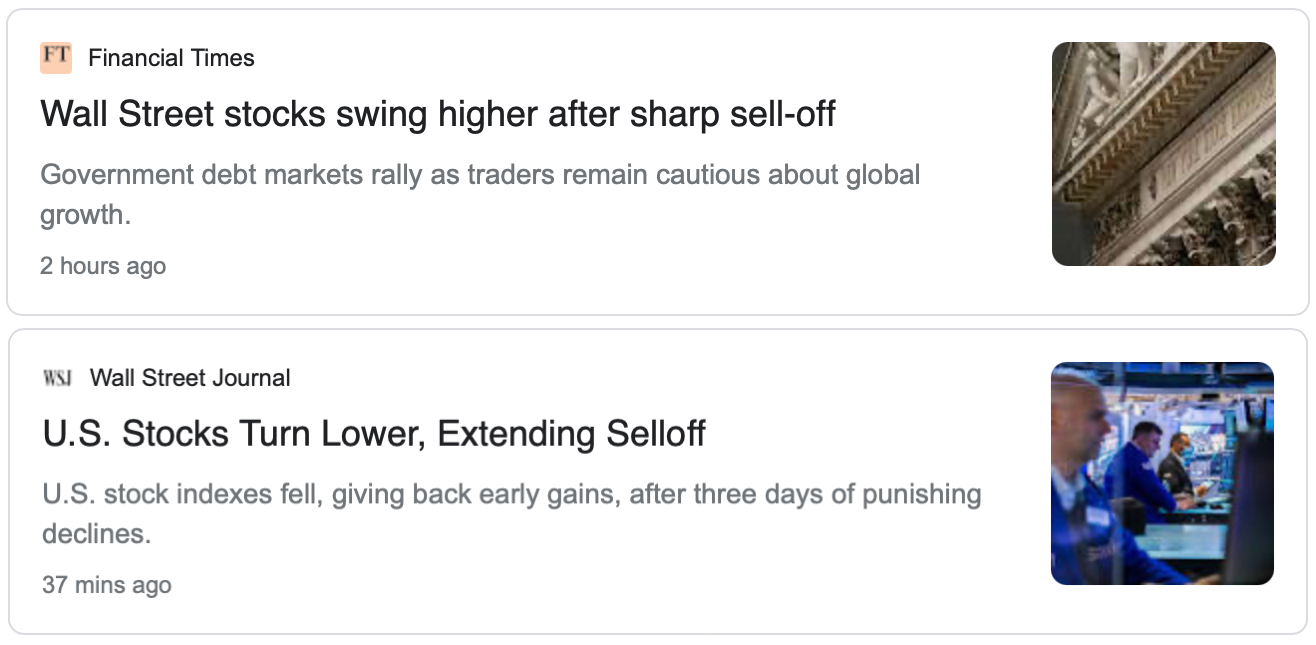 A story in two pictures. Source: Google
In a typical market sell-off, investors look for something called capitulation.
Capitulation: the action of surrendering or ceasing to resist an opponent or demand.
That might look something like multiple, massive drawdowns with firmly negative sentiment, back to back. This can sometimes be a sign to bullish buyers waiting to deploy capital. When they see it, they funnel in at the open, scooping up the dip with force. Often, that’s all it takes to jump start the market back into bull-mode.
But this is not a typical market sell-off.
The worst start to a year, ever.
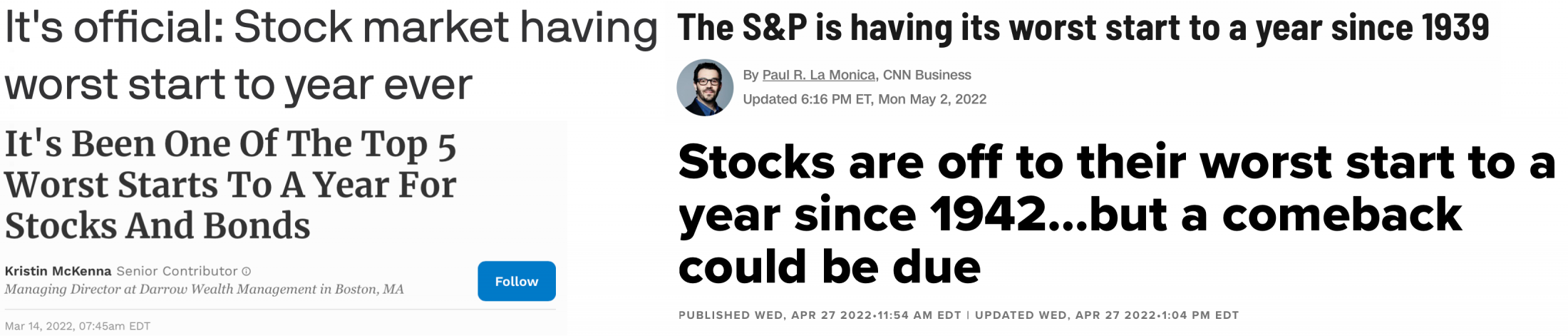 Sources: Axios, CNBC, CNN, Forbes
It isn’t a secret. In fact, it’s all anyone can talk about: the market has had a tough time getting off the mat in 2022. Year-to-date, the Dow Jones and the S&P 500 are in major correction territory. The Small Caps and the Nasdaq are even worse off — in a full-on bear market.
Here’s a chart of the major index ETF’s that illustrates the power of these sell-offs.
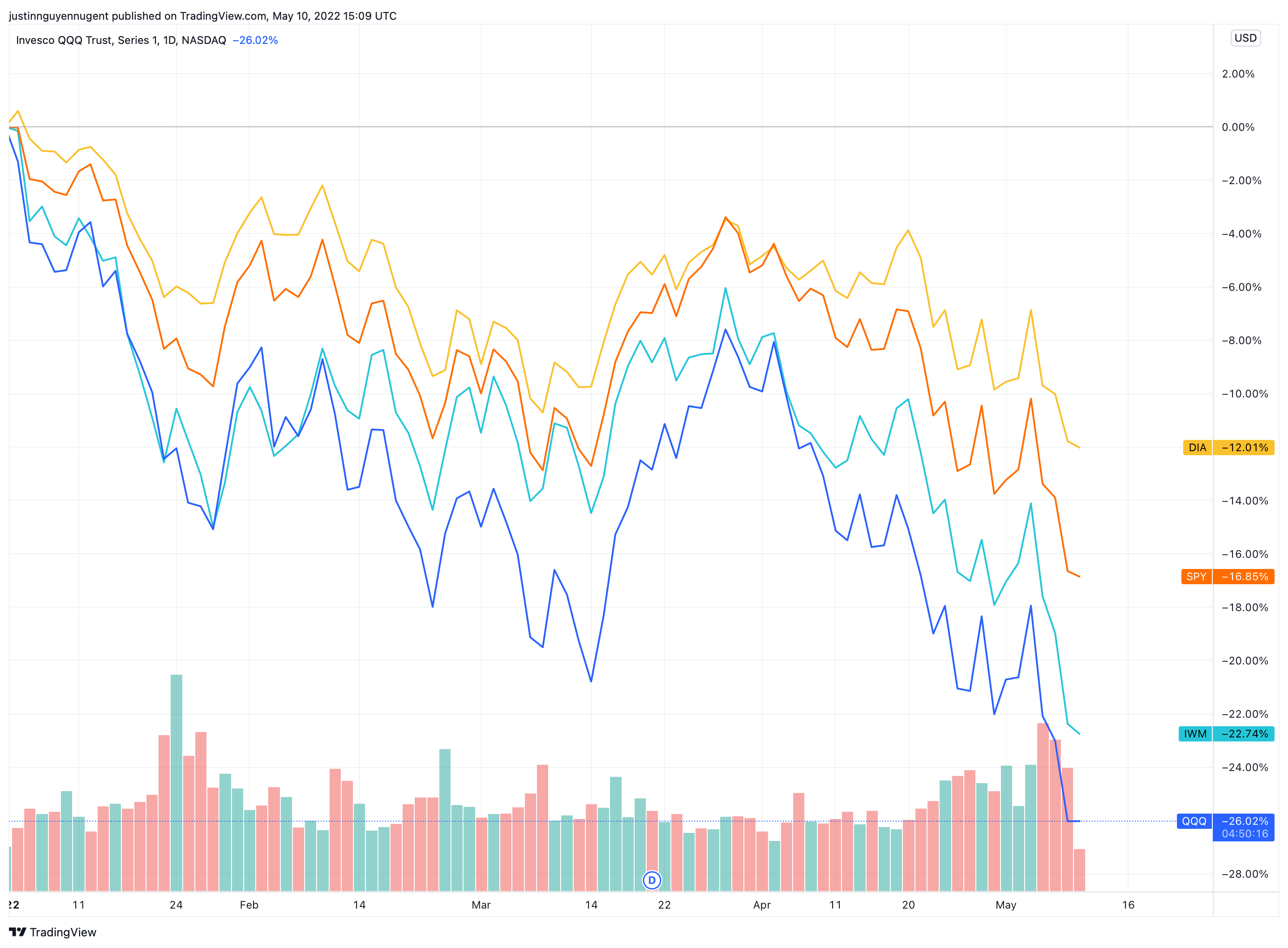 Depicted above, you can see the turmoil. Markets fell dramatically to start the year, entering correction territory in March.
On March 14th, the market tried to stage a comeback. Within two weeks, the indices rallied hard, but rather than continuing to soar — investors and traders took their profits. And along with those profits, the market momentum.
Almost every bounce to the upside has been hard, but equally short-lived. Traders fading the move became a trope in 2022’s choppy market.
As CNBC’s Guy Adami has said often said on Fast Money,
What was once a “buy the dip” market is now a “sell the rally” market.
That’s why when the market opened with big green chutes today, Jon Najarian wasn’t fooled.
Fading the Open
I don’t do that much trading on the opening. Most of you have heard that we always refer to that as amateur hour. There’s a lot of head-fakes in that first half hour, so we tend to fade the move rather than running with the moves at that time.
Part of Jon’s trading discipline is not chasing moves at the opening. That means not running with the pack when things open steeply in one direction. Instead, the open is a great time to sell to overeager investors and traders looking to chase an illusory rally, or “fade the move”.
When it comes to options, selling at the open can present long-option holders with an extra boost. That’s because typically, the first 15 minutes of market open (between 9:30 and 9:45 EST) run at a higher volume and a higher implied volatility due to the mass of traders looking to “rush in” and make their move, in fear of missing out on the day’s action.
Higher volume means more liquidity, making favorable order execution more achievable. Higher implied volatility means that there’s additional extrinsic value priced into option contracts — making them more expensive. Great if you’re the seller, not if you’re the buyer.
The Bottom Line
This rule won’t always come true. Sometimes a move at the open gets exacerbated throughout the rest of the trading day. But by taking profits when they arise, you can survive in this game a lot longer than traders who rush to follow the pack every time the market opens green.
That’s really the goal — to take your profit and move on to the next trade. Attempting to perfectly time the market and squeeze out every last percentage point is a recipe for disaster. Instead, option traders should open every trade with a specific trading plan. They need to know exactly when they plan to enter and exit a trade, for what profit, and potentially for what loss.
Are you struggling to hold yourself accountable when trading? Trouble creating consistent, reliable trading plans? Just can’t figure out what to trade? Look into UOA Essential. Get a weekly trading plan that follows the smart money, based on technical analysis that tells you the most favorable price to buy and sell at. Regardless of whether you use our trading plan, or your own, the most important thing is that you have one, and you stick to it. Remember: Discipline Dictates Action!