
Cryptocurrency
Power Ledger: An Archaic Change in the Distribution of Energy?
“There is an inconvenient truth facing the traditional energy supply industry: at some stage, it will be cheaper and more effective to self-supply than to rely on the network to provide low-cost, reliable, and clean energy.” This is one notable truth that Power Ledger outlines in their white paper. It has been true overtime that […]
“There is an inconvenient truth facing the traditional energy supply industry: at some stage, it will be cheaper and more effective to self-supply than to rely on the network to provide low-cost, reliable, and clean energy.”
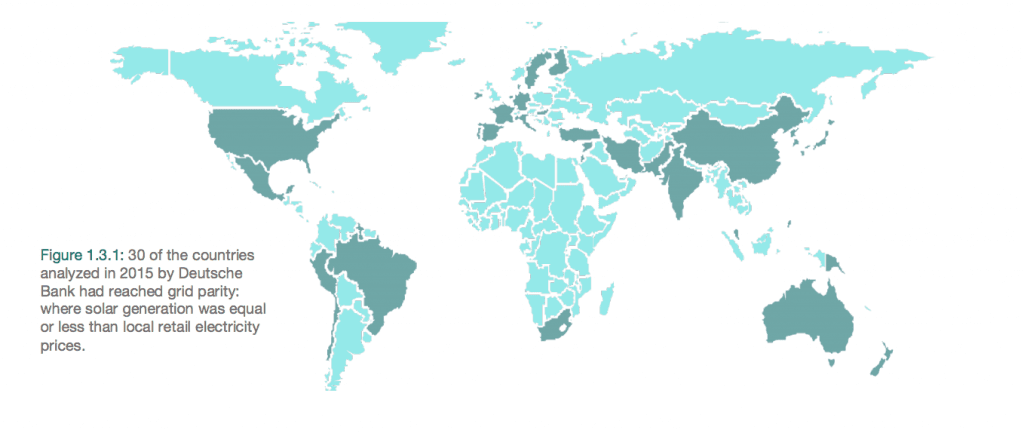
This is one notable truth that Power Ledger outlines in their white paper. It has been true overtime that peer-to-peer markets offer much better prices for consumers. In 2015, Deutsche Bank conducted a study which stated that ‘in much of the developed world it is already the case that self-generated power is equal or less to the cost of delivered energy’.
Currently, when a person conducts their own electricity via solar panels or wind turbines, they can sell their surplus energy back to the electric company, which is typically connected to a centralized power grid. These individuals who sell their surplus electricity are know as “prosumers”. Unfortunately, prosumers suffer because they can only sell their energy for what the grid is willing to pay. This leaves prosumers with little bargaining power. However, Power Ledger aims to design marketplaces where prosumers have the ability to sell their energy to those who demand it most. This marketplace can consist of several applications, of which Power Ledger highlights a few of them:
- Peer to Peer Trading – This is one of the main applications that can be seen across the Power Ledger blockchain. Peer to peer trading provides retailers with the ability to participate in an unregulated environment which the consumers themselves can simply trade electricity with one another and receive payment in real-time from an automated and trust-less settlement system. Prosumers and consumers benefit from the transparency of all their trades on a blockchain. They also benefit from low-cost settlements which all lead to lower power bills and improved returns for investments in renewables.
- Neo-Retailer – According to Power Ledger’s white paper a Neo-Retailer is ‘an innovative energy retailer who supports peer-to-peer trading through effective aggregation of consumer preference and demand.’ For Neo-Retailers, Power Ledger provides smart demand and supply management, along with nearly instantaneous payment settlements.
- Electric Vehicles – The platform can be used for real time metering data (interfacing with the Open Charge Point Protocol (OCPP)), collection of data, user identification and rapid transaction settlement in shared electric vehicles.
One major reason Power Ledger is distinguished is because it is already in full operation. In 2016, Power Ledger launched their first peer-to-peer energy trading platform in Australia. This cryptocurrency also has a proven track record; Power Ledger is Australia’s most successful ICO. In addition, the Australian Government awarded a grant for $8 million to build an energy economy in Fremantle on the Power Ledger platform. The project will assess how cities can use blockchain technology and data analytics to integrate distributed energy and water systems.
Currently, Power Ledger uses the EcoChain™ (EcoChain) blockchain, a private Proof of Stake, low-power blockchain developed in-house and live tested in the energy markets during trials in 2016 and 2017. According to the Power Ledger white paper sustainability is one of their core values. Furthermore, they aim to minimize the energy consumed by any proof-of-work algorithm. Power Ledger Core and EcoChain are both created upon the Ethereum blockchain. Therefore, Power Ledger coins are designated as ERC20 tokens. As a result, the Ethereum blockchain can feasibly handle the high frequency transaction volume of peer-to-peer energy trading.
Overall, there are many favorable aspects to the analysis of Power Ledger. It is promising to see that Power Ledger has been financially acknowledged by many prominent investors, as well as further government backing. Several ICOs are centered around future predictions of success, but Power Ledger has already created a brand-new system for reusing energy which puts the consumer in control of their energy supply.
Disclaimer: I am not a financial advisor. This is not financial advice. Please do your research independently and make object decisions. This article is intended to educate readers on the potential applications of the Cryptocurrency Power Ledger. Currently, I have a no position in POWR.