
Cryptocurrency
The Unknown Unknowns of Crypto and Future Tech
During a 2002 Pentagon news briefing, Donald Rumsfeld used the term ‘unknown unknowns’ when addressing the lack of evidence linking the Iraqi government with the supply of nuclear weapons to terrorist organizations. This term became highly debated over time. At the start of many new technologies, there are known knowns, known unknowns, and unknown unknowns. […]
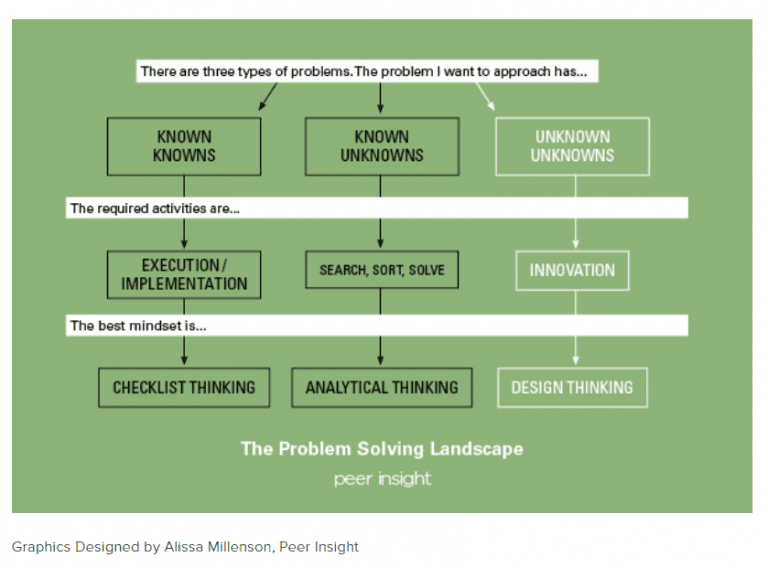
During a 2002 Pentagon news briefing, Donald Rumsfeld used the term ‘unknown unknowns’ when addressing the lack of evidence linking the Iraqi government with the supply of nuclear weapons to terrorist organizations. This term became highly debated over time. At the start of many new technologies, there are known knowns, known unknowns, and unknown unknowns. In other words, things we don’t know that we don’t know.
Throughout the historical evolution of technology we can predict the ways in which advancements will effect certain markets. However, what we can’t predict is the ways in which human behavior will be applied to the purpose of that technology.
For example, when cameras were effectively implemented into cell phones, it was predictable that companies like Kodak were going to lose a significant portion of marketshare. But what we couldn’t predict was the human behavioral interaction with a massive app like SnapChat. Essentially, the same technology is applied, but it is applied in a way in which it influences human behavior, and human behavior influences it.
There are presumably many unknown unknowns to the future applications of blockchain technology. There are many present obstacles which will effect the future success of crypto assets, yet possible technological solutions may be unknown to society. We cannot even envision them yet because they are incomprehensible. While it is easy to count the jobs lost as a result of technological advancement, it is very difficult to imagine the jobs created. In 2004 if you told someone you were going to be a YouTuber or an Uber driver that statement would not make any sense. These concepts were just not conceivable yet, and same argument is often applied to the next ten years of blockchain technology. The internet loves to make the claim, “You just cannot see it yet.”
This estimation may be accurate in the long term and as a result this article may not age well. But when comparing the current crypto world to the early stages of the internet (2000-2003), there are some significant dissimilarities in usage. In the early 2000s the internet was still a toy, as cryptocurrency is right now, and that is not a bad thing. The difference is that people were using the internet to entertain themselves, send funny cat pictures, communicate in chat rooms, and play mini games.
What is concerning is that very few people are buying into cryptocurrencies to use them for their actual purpose; as a means of exchange. This is especially true in the ICO market. Investors should consider how many people are buying into ICOs as an attempt to make returns vs. how many people are actually buying the product to use it for its purpose. Are people buying into ICOs such as file coin because they want to use the data storing service? Or are they betting on the fact that the service will be useful in the future? And how much does the impact of each approach matter?
Disclaimer: I am not a financial advisor. This is not financial advice. Please do your research independently and make objective decisions. This article is intended to educate readers on the future risks of ICO investing and the philosophy of future technology. The author of this article does not hold any positions in ICOs or file coin, but he does hold long positions in Bitcoin and other Alt Coins.