
Cryptocurrency
Why Any Current Trade is a Gamble
Some individuals are bullish and some are bearish when it comes to both the stock market and the cryptocurrency market. The current situation in the cryptocurrency market is highly debatable. When predicting a potential move, it is essential to approach the data from multiple perspectives. Variables should be acknowledged from both a technical analysis perspective, […]
Some individuals are bullish and some are bearish when it comes to both the stock market and the cryptocurrency market. The current situation in the cryptocurrency market is highly debatable. When predicting a potential move, it is essential to approach the data from multiple perspectives. Variables should be acknowledged from both a technical analysis perspective, and an institutional, infrastructural, and socio-economic perspective.
In the cryptocurrency market, most technical indicators are bearish. First of all, the descending triangle formation is statistically unfavorable. Additionally, every time the support at $6,000 is tested, the bottom becomes weaker. Nevertheless, black swan events do occur and they are often overlooked. For instance, many voices in the mainstream media predicted the Democratic party would have a 60% chance of winning the 2016 presidential election. Of course this did not happen, but human psychology has a tendency to discount the significance of the 40%. Cryptocurrency bulls will point to various factors in the market which may cause a price increase in Bitcoin. A few of these factors are somewhat undeniable and therefore they must be addressed.
Bitcoin bulls will often point to the potential of the project Bakkt. This is a great project which aims to create infrastructure which will give access for institutional investors. Many cryptocurrency bulls feel that institutional investors will bring a large amount of money into the space. This is true in the long run, but if demand is absent in the short run, this project may not have an immediate impact on price. Likewise, Coinbase recently had to close their index fund project due to a lack of institutional demand. It is questionable whether Baakt will have a similar result. In the longterm, Bakkt and other projects will allow institutional investors into the space. However, the question remains the same: ‘even if institutional investors have access to buy cryptocurrencies, will the demand be there?’
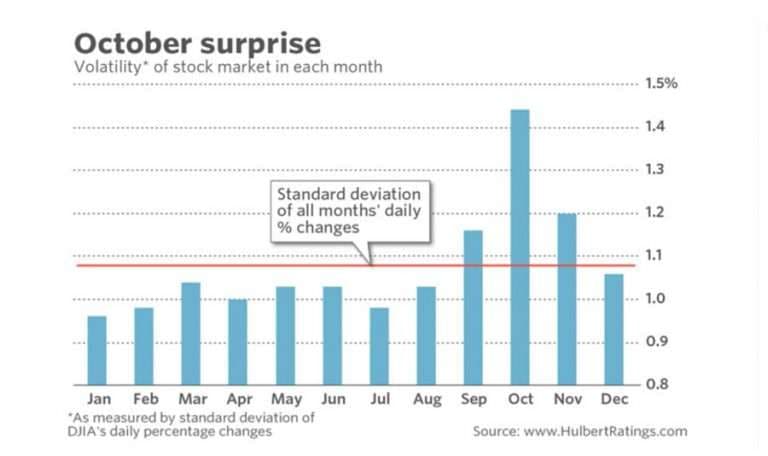
Another indicator that cryptocurrency bulls will point to is seasonality. Historically, November and December have experienced the most growth. This is not only true for Bitcoin but it is also true of every market in history. Seasonality studies have concluded that shorting the stock market in October, November, and December has had unfavorable results. This seasonality thesis draws upon +300 years of stock market data and is considered to be very accurate. This research should be acknowledged, but it is hard to be sure if this kind of data set is applicable to a digital asset which is less than ten years old. Things are still very fragile and unpredictable in the cryptocurrency market.
The condition of the US Stock market is often overlooked when evaluating the price of Bitcoin. This is primarily because investors in favor of cryptocurrencies often argue that Bitcoin is a hedge to traditional assets. This idea is still unconfirmed, as Bitcoin has never existed during a recession. The recent correction seen in the S&P 500 has caused some investors to reevaluate the current state of the market, but overall most investors aren’t worried.
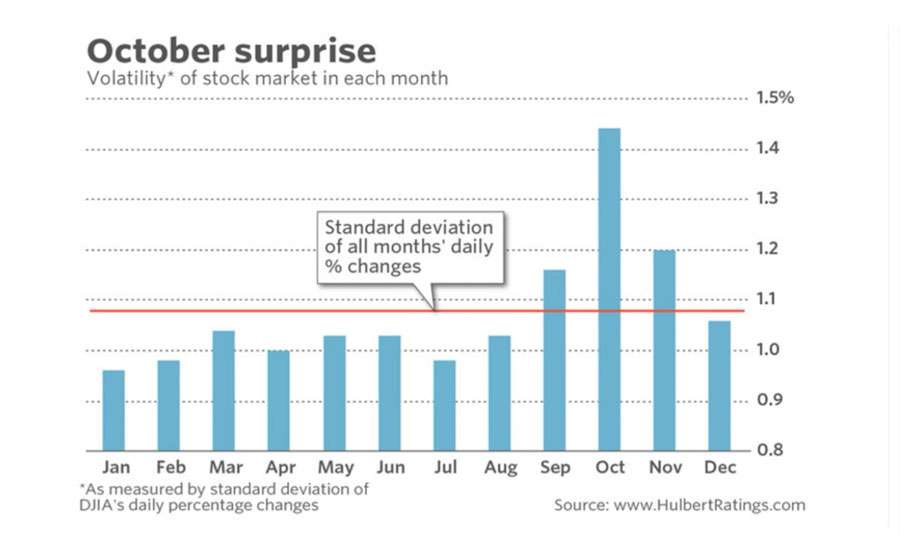
Bulls will point to a few indicators which are favorable for the stock market in the short term. For example, bulls will attribute the recent volatility seen in the S&P 500 to volatility data seen in the graph above. Historically, October is the most volatile month and therefore the 10% decrease in the S&P 500 is normal behavior that should not be concerning to investors. There have also been studies outlining the negative effects Halloween has had on the stock market. Two financial professors published research after studying over 300 years’ worth of stock-market data, from over one hundred stock markets around the world. Their findings concluded,
“Overall, the 62,962 monthly observations over 323 years show a strong Halloween effect. According to the analysis of 65 developed and emerging markets, average stock-market returns for the six months following Halloween have worked out at around 8.5% a year.”
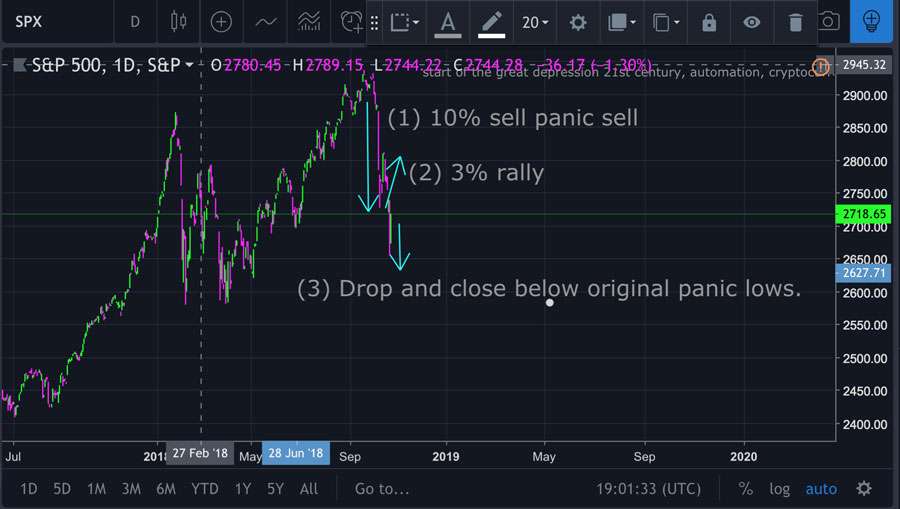
Bulls can definitely point to seasonality for their argument. Still, bears will point to indicators such as the Dow theory. An indicator which is bearish for the US Stock market is the Dow theory sell signal. According to the Dow theory, there are three stages to a sell signal:
1. Drop of 5-10% forming panic low.
2. Rally of about 3%
3. Drop and close below original panic lows.
The chart below indicates that the S&P 500 has undergone all three stages of the Dow theory sell signal. However, the sell signal only indicates a bearish probability 50% of the time. Nevertheless, 50% is significant, especially when we are in arguably one of the longest bull markets in history, and we have more debt than ever before. Also, the unemployment rate has reached a historic low, which is often an indicator of an upcoming recession.
Overall, it is uncertain whether the stock market will rally after the recent correction. Subsequently, it may never rally and the US may enter a dark recession comparable to 2008. Although many assume this scenario will never happen, many fundamental economic issues were never resolved during 2008. To make matters worse, major world powers such as Russia and China have been dumping US treasuries and buying safer assets such as gold. With many conflicting indicators within the stock market and the cryptocurrency market, any current trade is a gamble. Therefore, taking chips off of the table at this point may be a good decision.
Disclaimer: I am not a financial advisor. This is not financial advice. Please do your research independently and make objective decisions. This article is intended to educate readers on the conflicting indicators in the Stock Market and the Cryptocurrency market. The author of the article owns cryptocurrency.