
Cryptocurrency
Why XRP May Not Be What Many Think It Is
Cryptocurrency speculators are gradually realizing that the price of Bitcoin will only increase with renewed investment interest or real world usage. Large-scale adoption can be enabled with the development of the Lightning Network and other second layer solutions. Lightning will likely grow slowly overtime and become more popular within the ecosystem. Unfortunately, the general public […]

Cryptocurrency speculators are gradually realizing that the price of Bitcoin will only increase with renewed investment interest or real world usage. Large-scale adoption can be enabled with the development of the Lightning Network and other second layer solutions. Lightning will likely grow slowly overtime and become more popular within the ecosystem. Unfortunately, the general public underestimated the time horizon it would take to develop these scaling solutions. As a result, many people have given up on the technology because of how over-hyped it was last year. Which in all fairness, it was. The general public expected many technological advancements such as atomic swaps, decentralized exchanges, and additional scaling solutions. Speculators have flocked to XRP because it processes transactions in 4 seconds and does not exhaust electricity in the way Bitcoin does. Additionally, people are attracted to the idea ‘that if banks buy XRP, the price will go up based on efficacy and real world usage as opposed to mere speculation.’ It is logical for people to desire assurance from a CEO or one central figure.
This leads many to believe in the “Rippening” – a hypothetical situation in which XRP trades places with Bitcoin to become the #1 cryptocurrency. Unfortunately for XRP investors, the price of XRP is still tied to Bitcoin’s market dominance. This could change in the future with the addition of more base pairs on exchanges. As of now, the market still follows Bitcoin.
Many retail investors who are speculating on cryptocurrency don’t necessarily care about decentralization or disruptive technology. At the end of the day, they just want to experience the moon and XRP certainly has before. In fact, XRP was the best performing digital asset of 2017, and at one point during the year it was up over 36,000%.
Overall, Ripple is an excellent company and they have been killing it since 2012. From 2012-2016, Ripple raised $93.6 million from Andreessen Horowitz, GV (Google Ventures), and many other elite Silicon Valley VC firms. Ripple has also been working with over 100 financial institutions and even the Japanese government appears to be behind them. So why wouldn’t you invest in Ripple?
It all sounds too good to be true, right? This is the reaction most individuals have when they first hear XRP’s sales pitch. Unfortunately, there is a substantial distinction between Ripple and XRP. Whenever someone is considering investing in XRP, they should first understand the difference between the two.
Ripple was founded in 2012 as Opencoin, and later renamed to Ripple in 2015. Currently, Ripple operates out of San Fransisco and they have three products: xCurrent, xRapid, and xVia.
xCurrent is Ripple’s most popular product and it is what has allowed them to secure numerous banking partnerships. Ripple touts these partnerships throughout cryptocurrency news articles except for one catch: xCurrent does not use XRP. Banks are favorable toward xCurrent because it allows them to save time and money when sending international payments.
xVia is similar to xCurrent, except it is engineered toward corporations and as well as other financial institutions. Still, xVia does not require the use of XRP.
xRapid is for other financial institutions who need to minimize liquidity costs. xRapid is the only Ripple product which requires the use of XRP. Out of all of Ripple’s banking partnerships, only three banks are actually using xRapid.
Defenders of XRP will argue that many banks will begin using xRapid once it is ‘battle tested’. This is a valid argument which makes sense, after all no one wants to be first and no one wants to be last.
Ripple is aiming to take out Swift, the leader in Global Bank Payments for the past 45 years. Swift has significant market dominance. To put it into perspective, Swift works with over 11,000 institutions and employs over 2,600 people. Ripple would have to grow 100x its current size in order to have a chance at beating Swift. But never mind the likelihood of that event. Let’s assume Ripple absorbs all of Swift’s market with the use of xRapid. The majority of banks in the world are using xRapid for their settlements, and Ripple is one of the most dominant companies on the planet. Naturally, one would expect the price of XRP to increase. This is not necessarily the case. In other words, an asset gains value when a large amount of people hold it and continue to buy more because they will believe it will appreciate in the future. The problem is banks have no incentive to hold XRP. In fact, they have a disincentive to hold XRP. Banks are not speculating or investing, they are using XRP to settle international payments. Moreover, the longer they hold XRP before and after settlements, the more risk they incur while holding the volatile asset. Constant selling of XRP will not increase the price. This is the largest misconception about XRP.
Additionally, the idea that high-caliber investment banks such as Goldman Sachs or JPM will be buying XRP from hodlers at a price of $2.00-$3.00 is impractical. It is not realistic to believe banks will be that generous. The reality is that large financial institutions don’t want to participate in an immature market filled with inefficiencies and uncertainties. Even if the largest banks decided to buy XRP it would be through an OTC market or from Ripple directly. Whereas, market price would not be affected by the transaction. Overall, banks are not judged on their innovation the same way a tech company is. If Uber does not innovate at a faster rate than their competitors they will likely fail within five to ten years. A financial institution which has existed for 100+ years does not have to be on the cutting edge of technology. For this reason, banks are less likely to embrace an experimental technology in an emerging market.
Another misconception about XRP is that it is decentralized. The first and most obvious reason XRP is centralized is the fact that Ripple holds 60% of all XRP in an escrow account. If Ripple filed for bankruptcy and needed to liquidate their assets they could theoretically sell their XRP and create inflation within the XRP ecosystem. This is one central point of failure. Additionally, Ripple can freeze user accounts in order to be in compliance with financial and regulatory institutions. In February 2014, Ripple implemented the “balance freeze” feature into their protocol. This was notoriously demonstrated in 2015 when Ripple froze Jed McCaleb’s funds when he tried selling billions worth of XRP after leaving the company. Not only can Ripple freeze user accounts, but the entire system is constructed in a centralized manner. BitMex research team published an in-depth article on Ripple and concluded that the system is entirely centralized. They started by operating a Ripple node. According to BitMex research,
“The node operated by downloading a list of five public keys from the server v1.ripple.com, as the screenshot below shows. All five keys are assigned to Ripple.com. The software indicates that four of the five keys are required to support a proposal in order for it to be accepted. Since the keys were all downloaded from the Ripple.com server, Ripple is essentially in complete control of moving the ledger forward, therefore the system is centralized.”
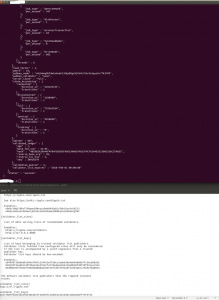
That being said, there is nothing inherently wrong with centralized systems. Centralized systems are much faster and easier to use than decentralized systems. It becomes problematic when the CEO of Ripple claims XRP is more decentralized than Bitcoin. This is an obviously lie because XRP has clear centralization in its source code. To reiterate, there is nothing wrong with centralized systems, but when a company spreads misinformation to attract investors the company becomes morally synthetic at best.
More importantly, XRP may be considered a security in the future. Ripple has lawyers that formerly worked for the SEC and there is always a possibility that they will cut a nice deal for Ripple. If the game is played fair and the assumption is that no corruption is performed, XRP will be evaluated by the Howie test: a series of simple questions to determine whether an asset is a security. Currently, XRP fails every metric of the Howie test:
1. Is it an investment of money? Yes.
2. Is there an expectation of profit? Yes.
3. Is it a common enterprise? Yes.
4. Does the investment rely on the efforts of a promoter or third party? Yes — Ripple Labs.
Defenders of XRP will argue that the XRP protocol will still exist even if Ripple goes away. This is true, but the obvious flaw is that the use of XRP is entirely dependent on Ripple’s ability to form, maintain, and facilitate banking relationships. Therefore, an investment in XRP is solely dependent on the success of Ripple.
This becomes increasingly problematic because Ripple continues to fund their operations by selling XRP. For instance, Ripple sold $163 million worth of XRP in Q3 2018 to fund operations. Also, Ripple has donated millions of dollars worth of XRP to non-profit organizations, all of which are conveniently tax-deductible.
Ripple could address these problems in a direct manner but they haven’t. When Ripple first created XRP, they were proud and publicly bragged about it. Now, Ripple wants to separate themselves from XRP entirely because they realize the legal implications it has.
Here’s an example of Ripple’s own words regarding the matter:
“Ripple Labs is the creator of Ripple. We developed the protocol and its distributed payment network, and we now work to support and promote its growth.”
“The company will retain a portion with the hope of creating a robust and liquid marketplace in order to monetize its only asset sometime in the future.”
If XRP is ruled a security the market may have an adverse reaction to the news. The result could be similar to the way the market reacted to the Bitcoin ETF proposal being denied. If the price of XRP flash crashes as a result of this news, Ripple could be in more trouble. If the SEC chooses to crack down on Ripple they could retroactively penalize the company for all of its unregistered and unsanctioned security issuances.
Misinformation runs rampant in the cryptocurrency landscape and XRP is no exception. Anything can happen in crypto and it is always important to keep an open mind. XRP may increase drastically in the next market cycle. In the long run, no one truly knows. Above all, the centralization needs to be acknowledged.
Disclaimer: I am not a financial advisor. This is not financial advice. Please do your research independently and make objective decisions. This article is intended to educate readers on Ripple and XRP. The author of the article trades cryptocurrency.