
Cryptocurrency
Will Blockchain Boom in Japan? Taking a Look at Historical Precedent
Will Blockchain Boom in Japan? Taking a Look at Historical Precedent Large scale adoptions of blockchain technology have massive implications on the direction and health of the market. One particular country that many analysts believe will provide a massive influx of new capital to the cryptocurrency market over the next decade is Japan. The extent […]
Will Blockchain Boom in Japan? Taking a Look at Historical Precedent
Large scale adoptions of blockchain technology have massive implications on the direction and health of the market. One particular country that many analysts believe will provide a massive influx of new capital to the cryptocurrency market over the next decade is Japan.
The extent to which blockchain is applied in a given society is largely dependent on a variety of circumstances. Economics, politics, and many other similar factors are critical to anticipating the amount of adoption that will occur over time. Recently, several articles have been published regarding Japan’s potential adoption of blockchain technology.
Japan has shown a relatively strong interest in Bitcoin and blockchain tech, and this relationship can be better understood by establishing some historical context.
The Applications and Implications of Technology in Japan
During the time since World War II, technology has played an integral part in the growth of the Japanese economy and on Japanese society as a whole. The rapid growth of the economy was paralleled by a rapid increase in technological capabilities which put Japan on the forefront of the global technological revolution.
Persistent innovation has been a stabilizing force in Japanese society, allowing them to overcome various historical economic and societal hurdles; this still holds true in contemporary Japan, and innovation will most likely be a necessary element in overcoming difficulties in the future.
By observing the growth of Japanese technology since World War II, it is possible to guess the direction of the future of Japanese technology as well as its applications and implications.
Historical Applications of Japanese Technology
In order to begin making assumptions about the future applications of technology in Japan, it is important to first understand the history of Japan’s technological growth as well as the factors that made this growth possible. During the time immediately following World War II, Japan saw unprecedented economic growth. Many economists and historians assert that underlying this extended economic growth was a wave of innovation associated with new technologies and unique methods for harnessing and distributing energy. This is particularly important, as Japan needed to meet mass energy demands in order to maintain steady production.
Following the oil crisis of 1973 and 1979, Japan began to integrate new forms of energy to diversify their energy mix. This process required technological innovation, and this innovation led to pioneering work in nuclear technology. Through the integration of various novel technological concepts, Japan was able to increase alternative energy use to nearly 20% of all energy used by 1990. This is representative of the idea that technology has been historically used in Japan to overcome diversity, but also depicts the societal importance of innovation. This emphasis on innovation and moving forward is reflective of the Japanese corporate structure, which has historically been the driving force of the economic growth within Japan. Innovation often arises from cooperation or competition, and the Japanese business structure encourages both of these qualities. Many of the post-World War II technological advancements arose from government funding and intervention.
The Japanese government was willing to make substantial investments in various production plants, as well as encouraging individual companies to collude in order to achieve as much progress as possible. For example, Japan was able to increase production of domestic cars to nearly 25% of the global auto-market in 1989 through a combination of government funding and promoting technological growth by rewarding companies for sharing innovative ideas that reduce costs. Typically, maximum efficiency was achieved through improvements to production technology to minimize costs.
These efforts to increase efficiency through technology are primarily responsible for Japan’s unprecedented economic and technological growth. This government intervention and historical emphasis on innovation are highly-conducive with the requirements of successfully establishing a blockchain infrastructure. Many of the principles that make cryptocurrency possible, like rapid technological advancement and ruthless efficiency, are the very same qualities that Japanese society has embraced in order to grow their economy.
Current State and Applications of Japanese Technology
The current state of technology in Japan is also an important factor in determining its future applications. The direction that Japanese technology is headed can largely be understood by observing the shift from producer-oriented technology to consumer-oriented technology. As noted in the previous paragraph, much of the historical technological growth in Japan can be attributed to the attempt to achieve ruthless efficiency. However, as the needs of Japanese society shift, as do the goals of production. Japan has begun to transition into a society in which the consumer dictates the direction of technology. Previously, the producers would dictate the flow of production, and the consumers would be forced to purchase whatever was produced, regardless of personal preference.
Recently, the needs of the consumer have become more sophisticated, which has led to what is referred to as a “market-in” strategy. This shift has larger implications than merely giving the consumer more say in what is produced; the new system allows the needs of society to direct the advancements of technology. The prioritization of consumer needs over production efficiency is a turning point in Japanese industry, and may be indicative of what is to come. This consumer-first approach is another reason blockchain technology is conducive to Japanese society, as a blockchain technology is meant to serve individuals rather than institutions. Transparency amongst financial institutions is an issue in Japan that may be addressed with innovative technological solutions in the near future.
So Where Does Blockchain Fit In?
Although it is impossible to pinpoint the exact rate of adoption of blockchain technology within Japan, many studies have shown that it is happening at an incredible rate. Analysts have long asserted that governmental use of blockchain tech is inevitable and that it was only a matter of time before the dominos begin to fall. Japan may be one of the first to apple blockchain tech but certainly will not be the last. Their novel applications of the technology into everyday life will undoubtedly be adopted by other governments in the near future.
One interesting application of blockchain tech was just reported by CoinDesk:
“SBI Holdings has reportedly partnered with Sumitomo Mitsui Financial Group (SMFG) to launch a digital stock exchange slated for spring 2022.
- SBI and SMFG are expected to launch the platform in Osaka to compete against the Tokyo Stock Exchange (TSE), according to a Nikkei report Thursday.
- The exchange is expected to be Japan’s first such stock exchange, allowing investors to trade digital securities using blockchain technology.
- In March, the companies will set up an operator called the Osaka Digital Exchange (ODX), with SBI to own 60% and SMFG 40%, per the report.
- SBI and SMFG, which both have brokerage arms, will put in place a governance structure to prevent any conflict of interest.
- The news comes after the TSE was criticized for a major hardware glitch in September caused the worst outage ever for the world’s third-largest equity market.
- The ODX is expected to start trading digital securities in 2023.”
A digital stock exchange offering digital securities is the type of forward-thinking applications that allows Japan to remain at the forefront of technological and economic innovation.
Technology has been an integral part of Japan since World War II and that will not change in the near future. It is evident from historical examples that innovation has been a driving force in Japan, and through the observation of these instances, it is possible to make predictions about the future. The growth of technology in Japan has been historically dependent on the needs of Japanese society. It is used as a means to overcome economic and societal hurdles and it is safe to assume that innovation like blockchain technology will continue to fill that role in the future.
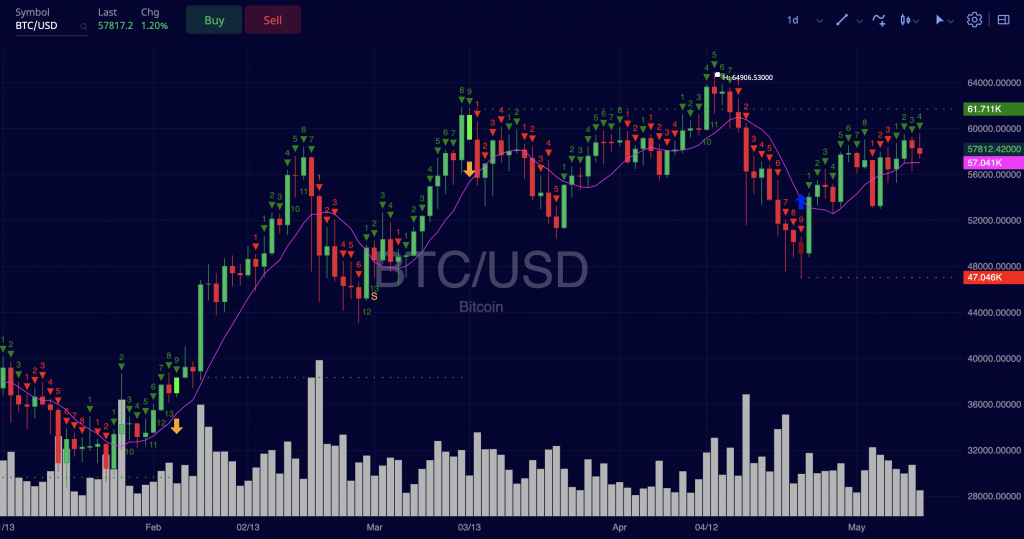
Chart: marketrebellion.com/crypto-community/
Works Cited
Mosk, Carl. Japanese industrial history: technology, urbanization, and economic growth. ME Sharpe, 2000.
Country Analysis Briefs – Japan, US Energy Information Administration, published January 2004
Dyer, J. H., and W. G. Ouchi. “9 Japanese-style Partnerships: giving companies a competitive edge.” Japanese Business 3.1 (1998): 200.
Nagamachi, Mitsuo. “Kansei engineering: a new ergonomic consumer-oriented technology for product development.” International Journal of industrial ergonomics 15.1 (1995): 3-11.
Normile, Dennis. “Plan to drop goals for women roils Japanese science.” Science 349.6244 (2015): 127-128.