
Options 101
Four Types of Options Strategies
Options have a reputation for being risky, but like many widely held beliefs, there’s another side to the story. Yes, it’s true they can be used in risky ways, but they can also be used in conservative ways. In fact, they can be used so conservatively that they make positions behave like a risk-free Treasury bill. It all comes down to how you’re using the options. So, to start trading options, it helps to understand the four basic types of options strategies.
While there are many types of options strategies, they fall into one of four basic categories:
- Naked
- Hedged
- Spreads
- Combinations
Naked Options Positions
Naked positions are unhedged positions, and that means they have unlimited potential loss in at least one direction, in other words, if the stock goes up or down.
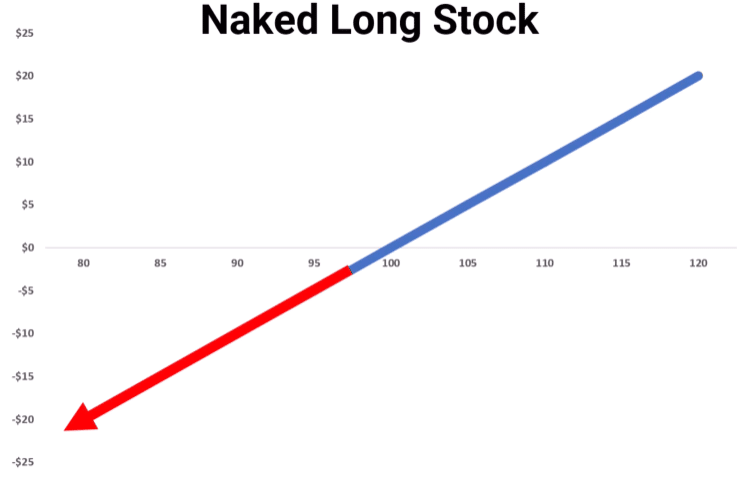
Now, we should point out that some definitions say a naked position is the purchase of any single security, for example, if you buy a MSFT call or put. But this is a bad definition because all positions could then be considered naked. However, if you buy shares of stock, some traders will call this “naked long stock” because long shares do have unlimited downside risk. So remember, that a naked position means it has unlimited risk in at least one direction.
For example, if you buy shares of stock, the risk graph looks like this, which has unlimited downside risk. Again, that’s why some traders call this a “naked” long stock position.
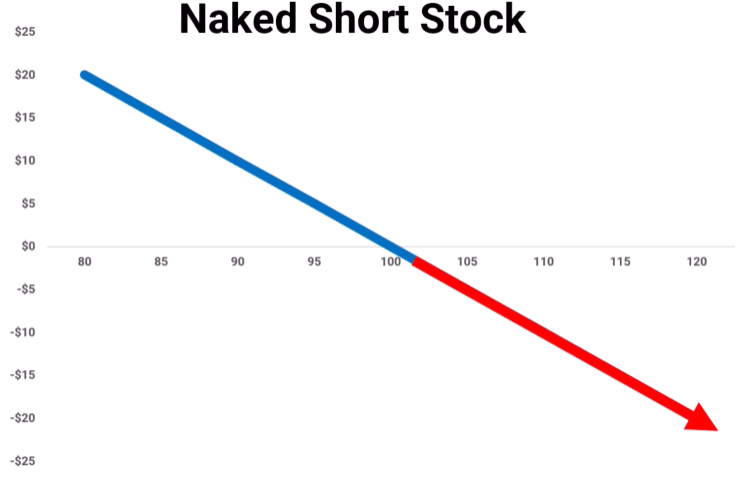
On the other hand, if you short shares of stock, you’d have unlimited upside risk, so a short position in shares of stock is also a naked position. It’s unhedged to the upside.
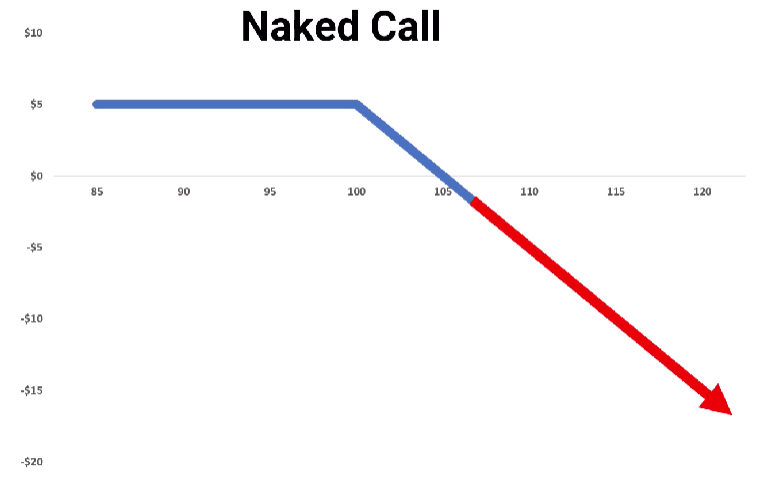
Here’s the risk graph for a naked call. If you sell a call by itself, it’s a naked call since it has unlimited upside risk.
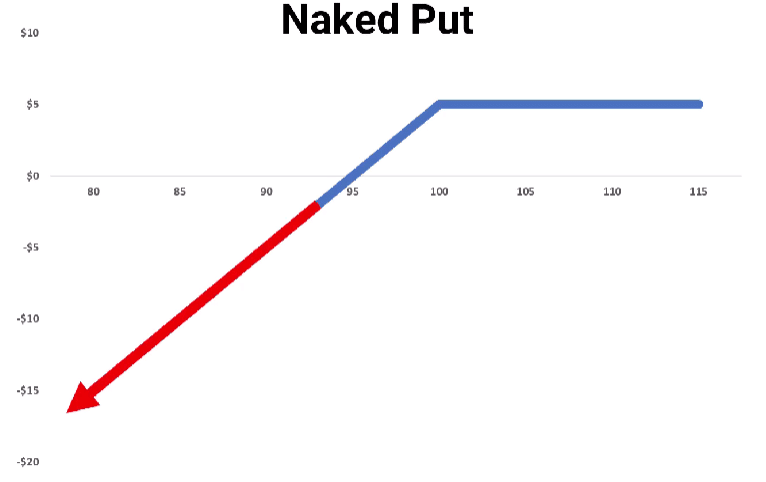
On the other hand, here’s the risk graph for a naked put. If you sell a put by itself, it’s a naked put since it has unlimited downside risk.
Remember that if a position has unlimited potential losses in at least one direction, it’s a naked position, and these are the most speculative and risky of options positions.
Hedged Options Positions
But not all positions carry unlimited risks, and those are the second type of option strategies, the hedged positions. Hedged positions have limited risk, so they’ll be things like:
- Stock + put
- Short stock + call
- Long call
- Long put
For example, we saw that long stock can be thought of as a naked long stock position since it has unlimited downside risk. However, if you take this same stock and buy a put you get the risk graph in blue.
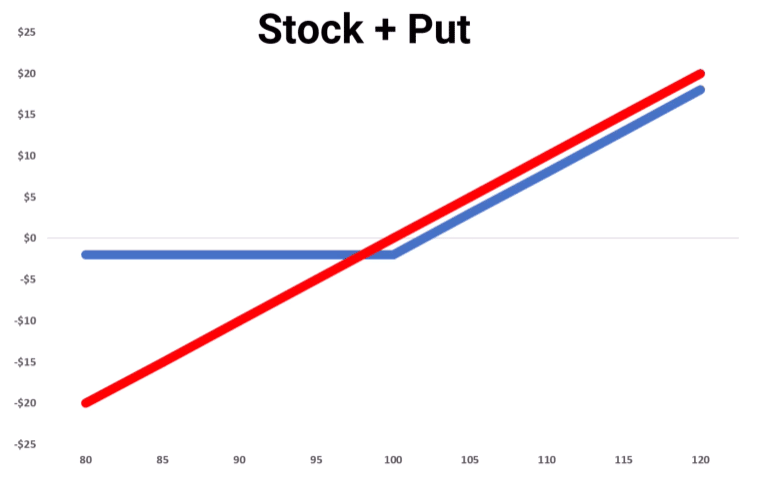
Buying a put limits this downside risk. Buying a put is like buying an insurance policy, since it gives you the right to sell your shares for the strike price should the stock’s price fall below. In other words, buying the put has hedged the downside risk. With the shares, you potentially had these losses. But the long put * greatly reduces those possible losses. You’ve eliminated the majority of possible risk, and that’s the whole idea of a hedged position.
We can create a similar hedge for a short stock position. Short stock, by itself, has unlimited upside risk. However, if you also buy a call you get the following risk graph in blue.
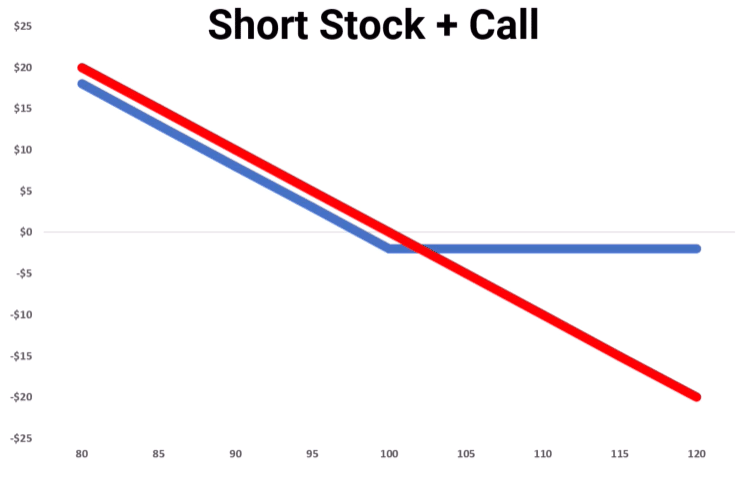
The long call gives you the right to buy shares for the strike price, so no matter how high the price may climb, you have a known, limited loss. The call hedges most of the upside risk. Now that you know what a hedged position is, let’s take a look at spreads.
Option Spreads
The third category of options is spread positions. Spread positions are created by a long position in one asset and a short position in another.
Spread positions do not have to be options! For instance, if you’re long shares of stock and short a call, a strategy called a covered call, is technically a type of spread.
You could also be long $10,000 cash and short a $100 put, a strategy called a cash-secured put, but it’s technically a type of spread. But when options traders talk about spreads, they usually mean long one option and short another option. For instance, Long a May $100 call and short the May $105 call. This is a strategy called a vertical spread, and the risk graph looks like this:
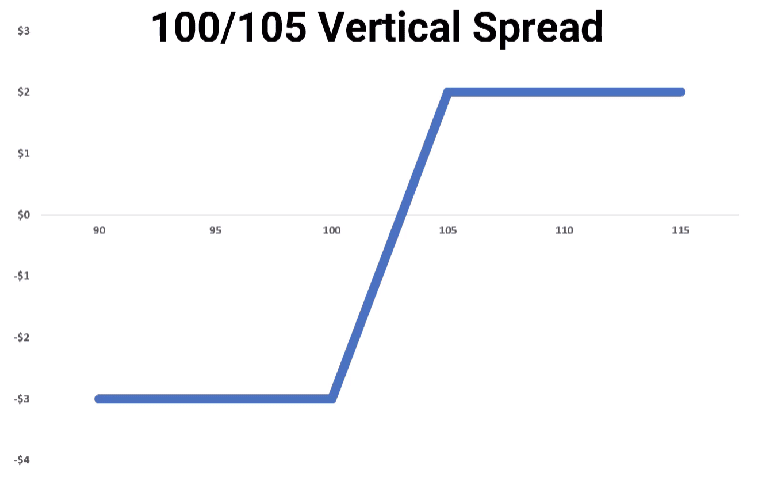
When spreads are created by long and short options of equal size, such as buy 1 contract and sell 1 contract, they’ll always have limited risk and limited reward. In this example, the most you can lose is $3 and the most you can make is $2.
Here’s the risk graph for the strategy of a covered call, which is long shares of stock plus a short call.
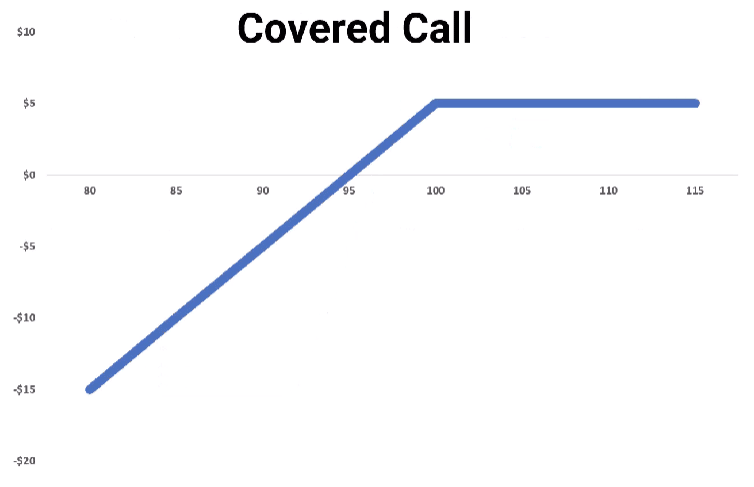
While it’s a type of spread, it does have unlimited downside risk, but that’s because the strategy doesn’t use two options. So, you must be careful when traders talk about “spread” positions having limited risk—it depends on what type of spread they’re talking about.
Combinations
The fourth type of options position is combinations.
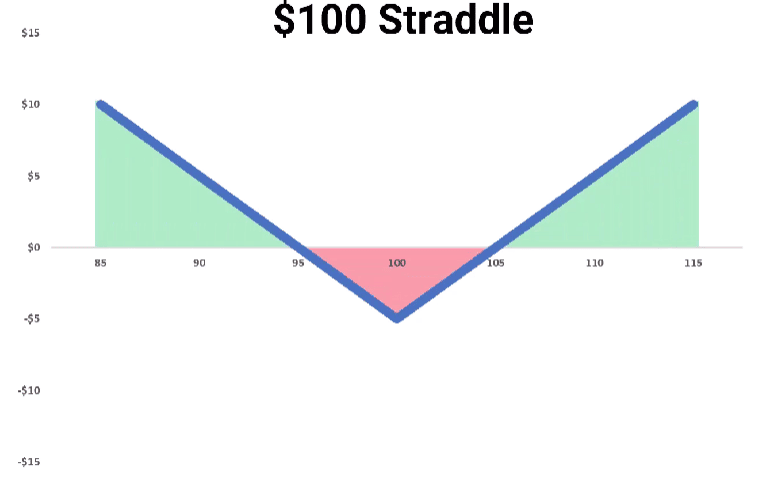
These positions use a combination of calls and puts. Both are long or both are short. These positions give a combination of positive and negative deltas, in other words, long and short shares of stock at the same time. So for example, a straddle is a combination strategy. This is where you buy a call and a put with the same strike and same expiration date. For instance, you might buy the May $100 put and buy the May $100 call.
Here’s the risk graph for a long $100 straddle, which has limited risk but potentially unlimited gains in either direction.
However, if you short a straddle, your risk graph becomes this:
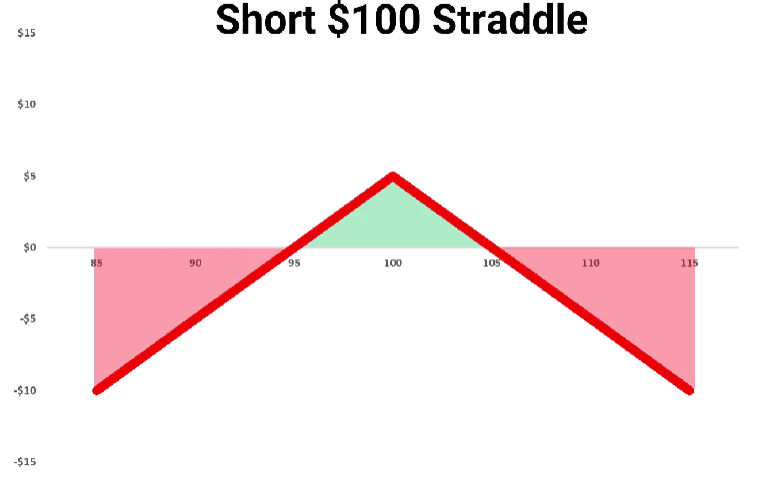
Now you have limited gains but potentially unlimited risk in both directions. That’s because you have a naked call and a naked put.
For the highlights, remember that…
- Naked positions have unlimited losses in at least one direction
- Hedged positions limit losses
- Spread positions use long and short positions
- Combination positions have combinations of calls and puts
When you understand the four types of options positions, you’ll see that the “risk” of options depends on how they’re being used. They were developed to hedge, or reduce risk, but they can be used in risky ways. It’s up to you to decide the goals of your portfolio and which types of options positions to use.